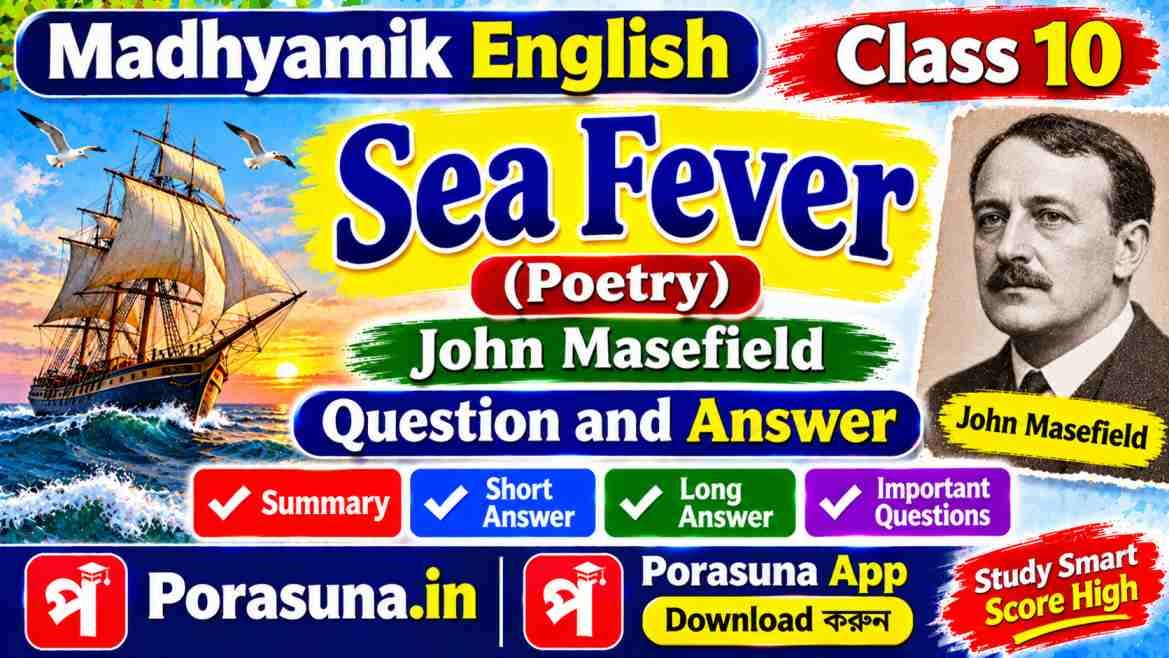
Sea Fever (Poetry) John Masefield – Madhyamik English Question and Answer
সি ফিভার – মাধ্যমিক ইংরেজি প্রশ্ন ও উত্তর
Sea Fever (Poetry) John Masefield – দশম শ্রেণির ইংরেজি | সি ফিভার – মাধ্যমিক ইংরেজি: নমস্কার বন্ধুরা, আজকের আলোচনার বিষয় ‘Sea Fever’ (Poetry) – John Masefield, যা মাধ্যমিক দশম শ্রেণির ইংরেজি (WBBSE Madhyamik Class 10 English) বিষয়ের একটি গুরুত্বপূর্ণ পাঠ। এই পোস্টে Sea Fever (Poetry) John Masefield – Madhyamik English Question and Answer | সি ফিভার – মাধ্যমিক ইংরেজি -এর থেকে গুরুত্বপূর্ণ MCQ, SAQ, সংক্ষিপ্ত প্রশ্নোত্তর, বর্ণনামূলক প্রশ্নোত্তর এবং Notes সুন্দরভাবে সাজিয়ে দেওয়া হয়েছে। মাধ্যমিক ইংরেজি পরীক্ষার প্রস্তুতির জন্য এই প্রশ্ন ও উত্তরগুলি ভালোভাবে পড়া এবং অনুশীলন করা অত্যন্ত উপকারী।
যেসব ছাত্রছাত্রী Sea Fever (Poetry) John Masefield – মাধ্যমিক দশম শ্রেণির ইংরেজি প্রশ্ন ও উত্তর, WBBSE সি ফিভার – মাধ্যমিক ইংরেজি অথবা পরীক্ষার গুরুত্বপূর্ণ ইংরেজি প্রশ্নোত্তর খুঁজছো, তারা এই পোস্টটি সম্পূর্ণভাবে পড়তে পারো। Sea Fever Poetry থেকে পরীক্ষায় গুরুত্বপূর্ণ হতে পারে এমন বিভিন্ন ধরনের প্রশ্ন ও উত্তর এখানে সহজ ভাষায় দেওয়া হয়েছে, যা West Bengal Madhyamik Class 10 English Exam Preparation এবং Revision-এর সময় বিশেষভাবে কাজে আসবে।
| বোর্ড | ডাব্লিউ বি সি এইচ এস ই (WBBSE) |
| ক্লাস | মাধ্যমিক দশম শ্রেণী (WB Class 10 Madhyamik) |
| বিষয় | মাধ্যমিক ইংরেজি (Madhyamik English) |
| পাঠ | Sea Fever (Poetry) John Masefield |
Sea Fever (Poetry) John Masefield – West Bengal Madhyamik Class 10 English Question and Answer | সি ফিভার – মাধ্যমিক ইংরেজি
MCQ : Sea Fever (Poetry) John Masefield – Madhyamik English Question and Answer | সি ফিভার – মাধ্যমিক ইংরেজি [প্রশ্নমান – ১]
- The poet asks for a: [কবি কী চান?]
(A) fast ship [দ্রুতগামী জাহাজ]
(B) new ship [নতুন জাহাজ]
(C) tall ship [উঁচু জাহাজ]
(D) small ship [ছোট জাহাজ]
Answer: (C) tall ship
- To steer the ship, the poet needs a: [জাহাজ চালানোর দিক নির্ণয় করতে কবির কী প্রয়োজন?]
(A) moon [চাঁদ]
(B) star [তারা]
(C) compass [কম্পাস]
(D) map [মানচিত্র]
Answer: (B) star
- The colour of the mist on the sea’s face is: [সমুদ্রের মুখে কুয়াশার রং কী?]
(A) white [সাদা]
(B) blue [নীল]
(C) black [কালো]
(D) grey [ধূসর]
Answer: (D) grey
- The call of the running tide is: [ছুটে চলা জোয়ারের ডাক কেমন?]
(A) soft and low [মৃদু ও নিচু]
(B) wild and clear [উন্মত্ত ও স্পষ্ট]
(C) sad and lonely [দুঃখময় ও একাকী]
(D) loud and harsh [জোরালো ও কর্কশ]
Answer: (B) wild and clear
- The poet wants a windy day with: [কবি বাতাসপূর্ণ দিনে কী চান?]
(A) the sun shining [সূর্যের আলো]
(B) the grey clouds scudding [ধূসর মেঘ দ্রুত ছুটে চলা]
(C) the rain falling [বৃষ্টি পড়া]
(D) the white clouds flying [সাদা মেঘ উড়ে চলা]
Answer: (D) the white clouds flying
- The poet wants to hear the crying of the: [কবি কার ডাক শুনতে চান?]
(A) albatross [অ্যালবাট্রস]
(B) whales [তিমি]
(C) sea-gulls [সামুদ্রিক গাঙচিল]
(D) fellow-rovers [সহযাত্রী ভবঘুরে নাবিক]
Answer: (C) sea-gulls
- The poet wants to lead a life like that of the: [কবি কাদের মতো জীবন কাটাতে চান?]
(A) sailors and merchants [নাবিক ও ব্যবসায়ীদের]
(B) captains and kings [ক্যাপ্টেন ও রাজাদের]
(C) gulls and whales [গাঙচিল ও তিমিদের]
(D) explorers and adventurers [অনুসন্ধানকারী ও অভিযাত্রীদের]
Answer: (C) gulls and whales
- In the vagrant gipsy life, the wind is like a: [ভবঘুরে জিপসি জীবনে বাতাস কিসের মতো?]
(A) soft blanket [নরম কম্বল]
(B) whetted knife [ধারালো ছুরি]
(C) crying child [কাঁদতে থাকা শিশু]
(D) gentle song [মৃদু গান]
Answer: (B) whetted knife
- The poet wants to hear a merry yarn from a: [কবি কার কাছ থেকে আনন্দময় গল্প শুনতে চান?]
(A) captain [ক্যাপ্টেন]
(B) laughing fellow-rover [হাসিখুশি সহযাত্রী ভবঘুরে]
(C) fisherman [মৎস্যজীবী]
(D) story-teller [গল্পকার]
Answer: (B) laughing fellow-rover
- The poet wants a quiet sleep when the long _____ is over. [দীর্ঘ _____ শেষ হলে কবি শান্তিতে ঘুমাতে চান।]
(A) day [দিন]
(B) journey [যাত্রা]
(C) voyage [সমুদ্রযাত্রা]
(D) trick [নাবিকের কাজের পালা]
Answer: (D) trick
- The phrase “I must go down to the seas again” is repeated: [“I must go down to the seas again” বাক্যাংশটি কতবার পুনরাবৃত্তি হয়েছে?]
(A) once [একবার]
(B) twice [দুবার]
(C) three times [তিনবার]
(D) four times [চারবার]
Answer: (C) three times
- The poet describes the sea as: [কবি সমুদ্রকে কেমন বর্ণনা করেছেন?]
(A) crowded [জনাকীর্ণ]
(B) noisy [কোলাহলপূর্ণ]
(C) lonely [নিঃসঙ্গ]
(D) calm [শান্ত]
Answer: (C) lonely
- The poem expresses the poet’s intense longing for: [কবিতাটি কবির কোন আকাঙ্ক্ষাকে প্রকাশ করে?]
(A) a home [একটি বাড়ি]
(B) a mountain adventure [পাহাড়ি অভিযান]
(C) a sea voyage [সমুদ্রযাত্রা]
(D) wealth and fame [ধনসম্পদ ও খ্যাতি]
Answer: (C) a sea voyage
- The word ‘vagrant’ me@ [‘Vagrant’ শব্দটির অর্থ কী?]
(A) rich [ধনী]
(B) settled [স্থায়ী]
(C) wandering [ভবঘুরে]
(D) happy [সুখী]
Answer: (C) wandering
- The ‘wheel’s kick’ refers to the: [‘Wheel’s kick’ বলতে কী বোঝায়?]
(A) sound of the wheel [চাকার শব্দ]
(B) breaking of the wheel [চাকা ভেঙে যাওয়া]
(C) sharp movement of the ship’s rudder [জাহাজের হালের আকস্মিক তীক্ষ্ণ নড়াচড়া]
(D) spinning of the wheel [চাকার ঘূর্ণন]
Answer: (C) sharp movement of the ship’s rudder
- The poet personifies the: [কবি কোনটিকে মানবীয় গুণে ভূষিত করেছেন?]
(A) ship [জাহাজ]
(B) star [তারা]
(C) wind [বাতাস]
(D) clouds [মেঘ]
Answer: (C) wind
- The ‘flung spray’ and ‘blown spume’ are associated with a: [‘Flung spray’ এবং ‘blown spume’ কিসের সঙ্গে সম্পর্কিত?]
(A) calm sea [শান্ত সমুদ্র]
(B) rainy day [বৃষ্টির দিন]
(C) stormy, windy sea [ঝড়ো ও বাতাসপূর্ণ সমুদ্র]
(D) foggy morning [কুয়াশাচ্ছন্ন সকাল]
Answer: (C) stormy, windy sea
- The poet wants a ‘sweet dream’ at the end of his: [কবি তাঁর _____ শেষে একটি মিষ্টি স্বপ্ন চান।]
(A) life [জীবন]
(B) trick or watch [কাজের পালা বা পাহারার সময়]
(C) day [দিন]
(D) adventure [অভিযান]
Answer: (B) trick or watch
- The ‘sea-fever’ is a metaphor for: [‘Sea-fever’ কীসের রূপক?]
(A) a disease caught at sea [সমুদ্রে হওয়া রোগ]
(B) a fear of the sea [সমুদ্রের ভয়]
(C) an irresistible desire for the sea [সমুদ্রের প্রতি অপ্রতিরোধ্য আকর্ষণ]
(D) a dislike for land [স্থলভাগের প্রতি অপছন্দ]
Answer: (C) an irresistible desire for the sea
- The poet of the poem ‘Sea Fever’ is: [‘Sea Fever’ কবিতার কবি কে?]
(A) John Keats [জন কিটস]
(B) Ted Hughes [টেড হিউজ]
(C) John Masefield [জন মেসফিল্ড]
(D) Ralph Waldo Emerson [রালফ ওয়াল্ডো এমারসন]
Answer: (C) John Masefield
- The tide’s call is something that may not be: [জোয়ারের ডাক এমন কিছু যা _____ করা যায় না।]
(A) heard [শোনা]
(B) understood [বোঝা]
(C) denied [অস্বীকার]
(D) repeated [পুনরাবৃত্তি]
Answer: (C) denied
- The word ‘yarn’ means a: [‘Yarn’ শব্দটির অর্থ কী?]
(A) piece of rope [দড়ির টুকরো]
(B) type of cloth [এক ধরনের কাপড়]
(C) long story or tale [দীর্ঘ গল্প বা কাহিনি]
(D) sad song [দুঃখের গান]
Answer: (C) long story or tale
- The ‘fellow-rover’ is a companion who is: [‘Fellow-rover’ হল এমন একজন সঙ্গী যিনি কেমন?]
(A) sad and serious [দুঃখী ও গম্ভীর]
(B) cheerful and wandering [হাসিখুশি ও ভবঘুরে]
(C) rich and powerful [ধনী ও ক্ষমতাশালী]
(D) young and inexperienced [তরুণ ও অনভিজ্ঞ]
Answer: (B) cheerful and wandering
- The poem consists of: [কবিতাটি কয়টি স্তবক নিয়ে গঠিত?]
(A) two stanzas [দুটি স্তবক]
(B) three stanzas [তিনটি স্তবক]
(C) four stanzas [চারটি স্তবক]
(D) one long stanza [একটি দীর্ঘ স্তবক]
Answer: (B) three stanzas
- The overall mood of the poem is one of: [কবিতাটির সামগ্রিক আবহ কী?]
(A) sadness and despair [দুঃখ ও হতাশা]
(B) intense wanderlust and excitement [ভ্রমণের তীব্র আকাঙ্ক্ষা ও উত্তেজনা]
(C) anger and frustration [রাগ ও হতাশা]
(D) peace and tranquillity [শান্তি ও প্রশান্তি]
Answer: (B) intense wanderlust and excitement
- The ‘grey dawn breaking’ suggests the journey will begin: [‘Grey dawn breaking’ ইঙ্গিত দেয় যে যাত্রা শুরু হবে কখন?]
(A) at midnight [মধ্যরাতে]
(B) in the evening [সন্ধ্যায়]
(C) in the afternoon [বিকেলে]
(D) early in the morning [সকালের প্রথম দিকে]
Answer: (D) early in the morning
- The sea life is described as ‘vagrant gipsy’ because it is: [সমুদ্রের জীবনকে ‘vagrant gipsy’ বলা হয়েছে কারণ এটি কেমন?]
(A) luxurious [বিলাসবহুল]
(B) difficult [কঠিন]
(C) settled and stable [স্থির ও স্থায়ী]
(D) free and wandering [মুক্ত ও ভবঘুরে]
Answer: (D) free and wandering
- The ‘white sail’s shaking’ is an image that appeals to the sense of: [‘White sail’s shaking’ চিত্রকল্পটি কোন ইন্দ্রিয়কে উদ্দীপিত করে?]
(A) sound [শ্রবণ]
(B) sight [দর্শন]
(C) touch [স্পর্শ]
(D) both sight and sound [দর্শন ও শ্রবণ উভয়ই]
Answer: (D) both sight and sound
- The poet is attracted to the sea’s: [কবি সমুদ্রের কোন বৈশিষ্ট্যের প্রতি আকৃষ্ট?]
(A) calmness [শান্তভাব]
(B) colourful life [বর্ণময় জীবন]
(C) wild and lonely nature [উন্মুক্ত ও নিঃসঙ্গ প্রকৃতি]
(D) hidden treasures [গোপন ধনসম্পদ]
Answer: (C) wild and lonely nature
- The word ‘whetted’ me@ [‘Whetted’ শব্দটির অর্থ কী?]
(A) wet [ভেজা]
(B) cold [ঠান্ডা]
(C) sharpened [ধারালো করা]
(D) strong [শক্তিশালী]
Answer: (C) sharpened
- The poem is a celebration of: [কবিতাটি কিসের উদযাপন?]
(A) a sailor’s life [একজন নাবিকের জীবন]
(B) the beauty of the sky [আকাশের সৌন্দর্য]
(C) the power of the wind [বাতাসের শক্তি]
(D) a peaceful life [শান্তিপূর্ণ জীবন]
Answer: (A) a sailor’s life
- The ‘gull’s way’ and the ‘whale’s way’ refer to a life that is: [‘Gull’s way’ এবং ‘whale’s way’ এমন জীবনকে বোঝায় যা কেমন?]
(A) in harmony with nature [প্রকৃতির সঙ্গে সামঞ্জস্যপূর্ণ]
(B) difficult and dangerous [কঠিন ও বিপজ্জনক]
(C) lonely and isolated [নিঃসঙ্গ ও বিচ্ছিন্ন]
(D) long and tiring [দীর্ঘ ও ক্লান্তিকর]
Answer: (A) in harmony with nature
- The ‘sea’s face’ is an example of: [‘Sea’s face’ কোন অলংকারের উদাহরণ?]
(A) simile [উপমা]
(B) metaphor [রূপক]
(C) personification [মানবীকরণ]
(D) alliteration [অনুপ্রাস]
Answer: (C) personification
- What the poet wants at the end of a voyage is: [সমুদ্রযাত্রার শেষে কবি কী চান?]
(A) more adventure [আরও অভিযান]
(B) a prize [একটি পুরস্কার]
(C) rest and peace [বিশ্রাম ও শান্তি]
(D) a new ship [একটি নতুন জাহাজ]
Answer: (C) rest and peace
- The poem uses a lot of: [কবিতাটিতে প্রচুর কী ব্যবহার করা হয়েছে?]
(A) complex vocabulary [জটিল শব্দভাণ্ডার]
(B) philosophical ideas [দার্শনিক ভাবনা]
(C) sensory imagery [ইন্দ্রিয়গ্রাহ্য চিত্রকল্প]
(D) historical references [ঐতিহাসিক উল্লেখ]
Answer: (C) sensory imagery
- The ‘running tide’ symbolizes: [‘Running tide’ কীসের প্রতীক?]
(A) the danger of the sea [সমুদ্রের বিপদ]
(B) the unstoppable call of nature and adventure [প্রকৃতি ও অভিযানের অপ্রতিরোধ্য আহ্বান]
(C) the passing of time [সময়ের প্রবাহ]
(D) the routine of the sea [সমুদ্রের দৈনন্দিন নিয়ম]
Answer: (B) the unstoppable call of nature and adventure
- The phrase “the long trick” refers to a sailor’s: [“The long trick” বলতে একজন নাবিকের কী বোঝায়?]
(A) magic show [জাদু প্রদর্শনী]
(B) entire life [সম্পূর্ণ জীবন]
(C) period of duty or watch on the ship [জাহাজে কাজের পালা বা পাহারার সময়]
(D) final journey [শেষ যাত্রা]
Answer: (C) period of duty or watch on the ship
- The speaker of the poem is most likely a/an: [কবিতার বক্তা সম্ভবত কে?]
(A) fisherman [মৎস্যজীবী]
(B) experienced sailor [অভিজ্ঞ নাবিক]
(C) pirate [জলদস্যু]
(D) naval officer [নৌবাহিনীর কর্মকর্তা]
Answer: (B) experienced sailor
- All the poet asks for is a tall ship and: [কবি শুধু একটি উঁচু জাহাজ এবং কী চান?]
(A) a good crew [একটি ভালো নাবিকদল]
(B) a fair wind [অনুকূল বাতাস]
(C) a star to steer her by [দিক নির্ণয়ের জন্য একটি তারা]
(D) a calm sea [শান্ত সমুদ্র]
Answer: (C) a star to steer her by
- The ‘wind’s song’ is an image appealing to the sense of: [‘Wind’s song’ চিত্রকল্পটি কোন ইন্দ্রিয়কে উদ্দীপিত করে?]
(A) sight [দর্শন]
(B) sound [শ্রবণ]
(C) touch [স্পর্শ]
(D) taste [স্বাদ]
Answer: (B) sound
[Madhyamik English Suggestion Click Here]
VSAQ : Sea Fever (Poetry) John Masefield – Madhyamik English Question and Answer | সি ফিভার – মাধ্যমিক ইংরেজি [প্রশ্নমান – ১]
- Who is the poet of ‘Sea Fever’?
[‘Sea Fever’ কবিতার কবি কে?]
Answer: John Masefield.
[জন মেসফিল্ড।]
- What does the poet want at the beginning of the poem?
[কবিতার শুরুতে কবি কী চান?]
Answer: He wants a tall ship and a star to steer her by.
[তিনি একটি উঁচু জাহাজ ও দিক নির্ণয়ের জন্য একটি তারা চান।]
- What does the poet need to steer his ship?
[জাহাজ চালানোর দিক নির্ণয় করতে কবির কী প্রয়োজন?]
Answer: He needs a star.
[তাঁর একটি তারা প্রয়োজন।]
- What colour is the mist on the sea’s face?
[সমুদ্রের মুখে কুয়াশার রং কী?]
Answer: The mist is grey.
[কুয়াশার রং ধূসর।]
- What does the poet call the tide?
[কবি জোয়ারকে কীভাবে বর্ণনা করেছেন?]
Answer: He calls it the running tide.
[তিনি একে ছুটে চলা জোয়ার বলেছেন।]
- How is the call of the running tide described?
[ছুটে চলা জোয়ারের ডাক কেমন?]
Answer: It is wild and clear.
[এটি উন্মত্ত ও স্পষ্ট।]
- What kind of day does the poet want?
[কবি কেমন দিন চান?]
Answer: He wants a windy day.
[তিনি একটি বাতাসপূর্ণ দিন চান।]
- What does the poet want to see flying in the sky?
[কবি আকাশে কী উড়তে দেখতে চান?]
Answer: He wants to see white clouds flying.
[তিনি সাদা মেঘ উড়তে দেখতে চান।]
- Which birds does the poet want to hear crying?
[কবি কোন পাখির ডাক শুনতে চান?]
Answer: He wants to hear the sea-gulls crying.
[তিনি সামুদ্রিক গাঙচিলের ডাক শুনতে চান।]
- What does the poet want to follow at sea?
[কবি সমুদ্রে কাদের পথ অনুসরণ করতে চান?]
Answer: He wants to follow the gull’s way and the whale’s way.
[তিনি গাঙচিল ও তিমির পথ অনুসরণ করতে চান।]
- What kind of life does the poet want to lead?
[কবি কেমন জীবন কাটাতে চান?]
Answer: He wants to lead a vagrant gipsy life.
[তিনি ভবঘুরে জিপসি জীবন কাটাতে চান।]
- What is meant by ‘vagrant’?
[‘Vagrant’ শব্দটির অর্থ কী?]
Answer: ‘Vagrant’ means wandering.
[‘Vagrant’ অর্থ ভবঘুরে।]
- What is the wind compared to in the poem?
[কবিতায় বাতাসকে কিসের সঙ্গে তুলনা করা হয়েছে?]
Answer: The wind is compared to a whetted knife.
[বাতাসকে একটি ধারালো ছুরির সঙ্গে তুলনা করা হয়েছে।]
- What does ‘whetted’ mean?
[‘Whetted’ শব্দটির অর্থ কী?]
Answer: ‘Whetted’ means sharpened.
[‘Whetted’ অর্থ ধারালো করা।]
- What does the poet want to hear from a fellow-rover?
[কবি একজন সহযাত্রী নাবিকের কাছ থেকে কী শুনতে চান?]
Answer: He wants to hear a merry yarn.
[তিনি একটি আনন্দময় গল্প শুনতে চান।]
- What is a ‘yarn’?
[‘Yarn’ কী?]
Answer: A yarn is a long story or tale.
[‘Yarn’ হল একটি দীর্ঘ গল্প বা কাহিনি।]
- Who is a ‘fellow-rover’?
[‘Fellow-rover’ কে?]
Answer: A fellow-rover is a companion who wanders from place to place.
[‘Fellow-rover’ হল এমন একজন সঙ্গী যিনি এক স্থান থেকে অন্য স্থানে ঘুরে বেড়ান।]
- What does the poet want after the long trick is over?
[দীর্ঘ কাজের পালা শেষ হলে কবি কী চান?]
Answer: He wants a quiet sleep and a sweet dream.
[তিনি শান্ত ঘুম ও মধুর স্বপ্ন চান।]
- What is a ‘long trick’ in a sailor’s life?
[নাবিকের জীবনে ‘long trick’ কী?]
Answer: It is a long period of duty or watch on a ship.
[এটি জাহাজে দীর্ঘ সময়ের কাজের পালা বা পাহারার সময়।]
- How many stanzas are there in the poem?
[কবিতাটিতে কয়টি স্তবক রয়েছে?]
Answer: There are three stanzas.
[কবিতাটিতে তিনটি স্তবক রয়েছে।]
- How many times is “I must go down to the seas again” repeated?
[“I must go down to the seas again” বাক্যটি কতবার পুনরাবৃত্তি হয়েছে?]
Answer: It is repeated three times.
[বাক্যটি তিনবার পুনরাবৃত্তি হয়েছে।]
- What does ‘sea-fever’ mean?
[‘Sea-fever’ বলতে কী বোঝায়?]
Answer: It means an irresistible desire for the sea.
[এটি সমুদ্রের প্রতি অপ্রতিরোধ্য আকাঙ্ক্ষাকে বোঝায়।]
- What is the mood of the poem?
[কবিতাটির আবহ কেমন?]
Answer: The mood is adventurous and exciting.
[কবিতাটির আবহ রোমাঞ্চকর ও উত্তেজনাপূর্ণ।]
- What does ‘lonely sea’ suggest?
[‘Lonely sea’ কী বোঝায়?]
Answer: It suggests the vast and isolated nature of the sea.
[এটি সমুদ্রের বিশাল ও বিচ্ছিন্ন প্রকৃতিকে বোঝায়।]
- What is meant by ‘flung spray’?
[‘Flung spray’ বলতে কী বোঝায়?]
Answer: It means seawater droplets thrown into the air by waves.
[এটি ঢেউয়ের আঘাতে বাতাসে ছিটকে ওঠা জলকণাকে বোঝায়।]
- What is meant by ‘blown spume’?
[‘Blown spume’ বলতে কী বোঝায়?]
Answer: It means sea foam blown away by the wind.
[এটি বাতাসে উড়ে যাওয়া সমুদ্রের ফেনাকে বোঝায়।]
- What does the ‘star’ symbolize in the poem?
[কবিতায় ‘star’ কীসের প্রতীক?]
Answer: It symbolizes guidance and direction.
[এটি পথপ্রদর্শন ও দিকনির্দেশের প্রতীক।]
- What is the poet’s attitude towards the sea?
[সমুদ্রের প্রতি কবির মনোভাব কেমন?]
Answer: The poet has a deep love and longing for the sea.
[সমুদ্রের প্রতি কবির গভীর ভালোবাসা ও আকাঙ্ক্ষা রয়েছে।]
- What does the poet mean by ‘the wheel’s kick’?
[‘The wheel’s kick’ বলতে কবি কী বোঝান?]
Answer: It refers to the movement or force felt through the ship’s steering wheel.
[এটি জাহাজের হাল বা steering wheel-এর মাধ্যমে অনুভূত নড়াচড়া বা ধাক্কাকে বোঝায়।]
- Which sense is appealed to by ‘wind’s song’?
[‘Wind’s song’ কোন ইন্দ্রিয়কে উদ্দীপিত করে?]
Answer: It appeals to the sense of hearing.
[এটি শ্রবণেন্দ্রিয়কে উদ্দীপিত করে।]
- Which sense is appealed to by ‘grey mist’?
[‘Grey mist’ কোন ইন্দ্রিয়কে উদ্দীপিত করে?]
Answer: It appeals to the sense of sight.
[এটি দর্শনেন্দ্রিয়কে উদ্দীপিত করে।]
- What does the phrase ‘gull’s way and whale’s way’ suggest?
[‘Gull’s way and whale’s way’ কথাটি কী বোঝায়?]
Answer: It suggests a free life in harmony with nature.
[এটি প্রকৃতির সঙ্গে সামঞ্জস্য রেখে স্বাধীন জীবনযাপনকে বোঝায়।]
- What does the poet desire at the end of his duty?
[কাজের পালা শেষে কবি কী কামনা করেন?]
Answer: He desires rest, quiet sleep and a sweet dream.
[তিনি বিশ্রাম, শান্ত ঘুম ও মধুর স্বপ্ন কামনা করেন।]
- What is the central theme of ‘Sea Fever’?
[‘Sea Fever’ কবিতার মূল বিষয় কী?]
Answer: The central theme is the irresistible attraction of the sea and the freedom of adventurous life.
[কবিতার মূল বিষয় হল সমুদ্রের অপ্রতিরোধ্য আকর্ষণ এবং অভিযাত্রিক জীবনের স্বাধীনতা।]
- Why is the poem called ‘Sea Fever’?
[কবিতাটির নাম ‘Sea Fever’ কেন?]
Answer: It is called ‘Sea Fever’ because the poet feels an intense and irresistible longing to return to the sea.
[কবিতাটির নাম ‘Sea Fever’ কারণ কবির সমুদ্রে ফিরে যাওয়ার তীব্র ও অপ্রতিরোধ্য আকাঙ্ক্ষা রয়েছে।]
[Madhyamik Suggestion Click Here]
SAQ : Sea Fever (Poetry) John Masefield – Madhyamik English Question and Answer | সি ফিভার – মাধ্যমিক ইংরেজি [প্রশ্নমান – ২/৩]
- What are the three essential things the poet needs for his voyage in the first stanza?
[প্রথম স্তবকে কবির সমুদ্রযাত্রার জন্য প্রয়োজনীয় তিনটি বিষয় কী কী?]
Answer: The poet needs a tall ship, a star to steer her by, and the physical sensations of the sea, such as the wheel’s kick, the wind’s song and the white sail’s shaking.
[কবির একটি উঁচু জাহাজ, জাহাজের দিক নির্ণয়ের জন্য একটি তারা এবং সমুদ্রের বিভিন্ন অনুভূতি—যেমন হালের ধাক্কা, বাতাসের গান ও সাদা পালটির কাঁপুনি প্রয়োজন।]
- Why does the poet want to go down to the seas again?
[কবি কেন আবার সমুদ্রে ফিরে যেতে চান?]
Answer: The poet feels an irresistible urge or ‘sea-fever’ to return to the sea. The wild and clear call of the running tide cannot be denied.
[কবির সমুদ্রে ফিরে যাওয়ার এক অপ্রতিরোধ্য আকাঙ্ক্ষা বা ‘সি-ফিভার’ রয়েছে। ছুটে চলা জোয়ারের উন্মত্ত ও স্পষ্ট ডাক তিনি অস্বীকার করতে পারেন না।]
- What kind of day does the poet prefer for his journey?
[কবি তাঁর সমুদ্রযাত্রার জন্য কেমন দিন পছন্দ করেন?]
Answer: The poet prefers a windy day with white clouds flying across the sky. He also wants to experience the flung spray and blown spume of a rough sea.
[কবি আকাশে সাদা মেঘ উড়তে থাকা একটি বাতাসপূর্ণ দিন পছন্দ করেন। তিনি উত্তাল সমুদ্রের ছিটকে ওঠা জলকণা ও বাতাসে উড়ে যাওয়া ফেনাও উপভোগ করতে চান।]
- Describe the life that the poet wants to lead at sea.
[কবি সমুদ্রে কেমন জীবন কাটাতে চান?]
Answer: The poet wants to lead a ‘vagrant gipsy life’, full of freedom, wandering and adventure. He wishes to live in harmony with nature, following the gull’s way and the whale’s way.
[কবি স্বাধীনতা, ভবঘুরে জীবন ও অভিযানে পরিপূর্ণ ‘ভবঘুরে জিপসি জীবন’ কাটাতে চান। তিনি গাঙচিল ও তিমির পথ অনুসরণ করে প্রকৃতির সঙ্গে সামঞ্জস্য রেখে বাঁচতে চান।]
- Explain the simile “where the wind’s like a whetted knife”.
[“Where the wind’s like a whetted knife”—উপমাটির ব্যাখ্যা করো।]
Answer: The poet compares the sharp and cold sea wind to a sharpened knife. It suggests the biting and chilling effect of the wind on a sailor’s body.
[কবি সমুদ্রের তীক্ষ্ণ ও ঠান্ডা বাতাসকে ধারালো ছুরির সঙ্গে তুলনা করেছেন। এর মাধ্যমে নাবিকের শরীরে বাতাসের তীব্র ও শীতল অনুভূতি প্রকাশ পেয়েছে।]
- What does the poet desire after the “long trick’s over”?
[“Long trick’s over” হওয়ার পর কবি কী চান?]
Answer: After his long period of duty, the poet wants to hear a merry yarn from a laughing fellow-rover. Then he desires a quiet sleep and a sweet dream.
[দীর্ঘ সময়ের কাজের পালা শেষ হলে কবি একজন হাসিখুশি সহযাত্রীর কাছ থেকে আনন্দময় গল্প শুনতে চান। তারপর তিনি শান্তিতে ঘুমাতে এবং মধুর স্বপ্ন দেখতে চান।]
- What does the repetition of “I must go down to the seas again” suggest?
[“I must go down to the seas again” বাক্যটির পুনরাবৃত্তি কী বোঝায়?]
Answer: The repetition emphasizes the poet’s intense and irresistible desire to return to the sea. It shows that his longing for the sea is deep-rooted and recurring.
[বাক্যটির পুনরাবৃত্তি সমুদ্রে ফিরে যাওয়ার প্রতি কবির তীব্র ও অপ্রতিরোধ্য আকাঙ্ক্ষাকে জোরালোভাবে প্রকাশ করে। এটি সমুদ্রের প্রতি তাঁর গভীর ও বারবার ফিরে আসা আকর্ষণকে বোঝায়।]
- What is ‘sea-fever’? Why is the longing for the sea compared to a fever?
[‘সি-ফিভার’ কী? সমুদ্রের প্রতি আকাঙ্ক্ষাকে জ্বরের সঙ্গে তুলনা করা হয়েছে কেন?]
Answer: ‘Sea-fever’ means an intense and irresistible desire to go to the sea. It is compared to a fever because it is a powerful feeling that completely takes hold of a person.
[‘সি-ফিভার’ বলতে সমুদ্রে যাওয়ার তীব্র ও অপ্রতিরোধ্য আকাঙ্ক্ষাকে বোঝায়। একে জ্বরের সঙ্গে তুলনা করা হয়েছে কারণ এটি এমন এক প্রবল অনুভূতি, যা মানুষকে সম্পূর্ণভাবে আচ্ছন্ন করে ফেলে।]
- Identify two examples of personification in the poem.
[কবিতাটিতে মানবীকরণ অলংকারের দুটি উদাহরণ শনাক্ত করো।]
Answer: Two examples are ‘the sea’s face’ and ‘the wind’s song’. Here, the sea is given a human face and the wind is described as if it can sing.
[দুটি উদাহরণ হলো ‘the sea’s face’ এবং ‘the wind’s song’। এখানে সমুদ্রকে মানুষের মুখ দেওয়া হয়েছে এবং বাতাসকে মানুষের মতো গান গাইতে সক্ষম হিসেবে বর্ণনা করা হয়েছে।]
- What kind of companionship does the poet seek on his voyage?
[সমুদ্রযাত্রায় কবি কেমন সঙ্গ কামনা করেন?]
Answer: The poet seeks the companionship of a cheerful and experienced ‘laughing fellow-rover’. He wants to share merry stories and enjoy the adventurous life of the sea with him.
[কবি একজন হাসিখুশি ও অভিজ্ঞ ‘সহযাত্রী ভবঘুরে’র সঙ্গ চান। তাঁর সঙ্গে আনন্দময় গল্প ভাগ করে নিয়ে সমুদ্রের রোমাঞ্চকর জীবন উপভোগ করতে চান।]
- Why does the poet describe the sea as “lonely”?
[কবি সমুদ্রকে “lonely” বা নিঃসঙ্গ বলেছেন কেন?]
Answer: The poet calls the sea ‘lonely’ to highlight its vast, empty and isolated nature. This solitude attracts him because it offers freedom from the busy and crowded life on land.
[সমুদ্রের বিশাল, জনশূন্য ও বিচ্ছিন্ন প্রকৃতিকে তুলে ধরতে কবি একে ‘নিঃসঙ্গ’ বলেছেন। এই নির্জনতা তাঁকে আকর্ষণ করে, কারণ এটি স্থলভাগের ব্যস্ত ও জনাকীর্ণ জীবন থেকে মুক্তি দেয়।]
- What are the different sounds the poet wants to hear at sea?
[সমুদ্রে কবি কী কী শব্দ শুনতে চান?]
Answer: The poet wants to hear the wind’s song, the sea-gulls crying and the cheerful stories of a fellow-rover. He also enjoys the sound suggested by the shaking of the white sail.
[কবি বাতাসের গান, সামুদ্রিক গাঙচিলের ডাক এবং সহযাত্রী নাবিকের আনন্দময় গল্প শুনতে চান। সাদা পালটির কাঁপুনির মধ্য দিয়ে প্রকাশিত শব্দও তিনি উপভোগ করতে চান।]
- What is the significance of the “star to steer her by”?
[“Star to steer her by” কথাটির তাৎপর্য কী?]
Answer: The star acts as a navigational guide for the ship at sea. Symbolically, it represents direction, guidance and hope during the voyage.
[সমুদ্রে জাহাজের দিক নির্ণয়ের জন্য তারাটি পথপ্রদর্শক হিসেবে কাজ করে। প্রতীকী অর্থে এটি যাত্রাপথে দিকনির্দেশ, পথপ্রদর্শন ও আশার প্রতীক।]
- How does the poem appeal to the senses?
[কবিতাটি কীভাবে বিভিন্ন ইন্দ্রিয়কে উদ্দীপিত করে?]
Answer: The poem appeals to sight through images like grey mist and white clouds, to hearing through the wind’s song and sea-gulls’ cries, and to touch through the wheel’s kick and the sharp wind.
[ধূসর কুয়াশা ও সাদা মেঘের চিত্রের মাধ্যমে কবিতাটি দর্শনেন্দ্রিয়কে, বাতাসের গান ও গাঙচিলের ডাকের মাধ্যমে শ্রবণেন্দ্রিয়কে এবং হালের ধাক্কা ও তীক্ষ্ণ বাতাসের মাধ্যমে স্পর্শেন্দ্রিয়কে উদ্দীপিত করে।]
- Explain the meaning of “vagrant gipsy life”.
[“Vagrant gipsy life” কথাটির অর্থ ব্যাখ্যা করো।]
Answer: The phrase refers to a free, wandering and adventurous life without permanent attachment to any place. It expresses the poet’s desire to escape the restrictions and routines of settled life.
[এই কথাটি এমন এক স্বাধীন, ভবঘুরে ও অভিযাত্রিক জীবনকে বোঝায়, যেখানে কোনো নির্দিষ্ট স্থানের প্রতি স্থায়ী আসক্তি নেই। এটি স্থায়ী জীবনের নিয়ম ও সীমাবদ্ধতা থেকে মুক্ত হওয়ার কবির আকাঙ্ক্ষা প্রকাশ করে।]
- Why does the poet ask for a “tall ship”?
[কবি কেন একটি “tall ship” বা উঁচু জাহাজ চান?]
Answer: A tall ship represents a traditional sailing vessel associated with romance and adventure. The poet wants such a ship because it suits his dream of an adventurous life at sea.
[একটি উঁচু জাহাজ ঐতিহ্যবাহী পালতোলা জাহাজকে বোঝায়, যা রোমাঞ্চ ও অভিযানের সঙ্গে যুক্ত। সমুদ্রে রোমাঞ্চকর জীবন কাটানোর স্বপ্নের সঙ্গে মানানসই বলেই কবি এমন জাহাজ চান।]
- What aspects of nature does the poet seem to love?
[প্রকৃতির কোন কোন দিক কবির ভালো লাগে বলে মনে হয়?]
Answer: The poet loves the wild and powerful aspects of nature, such as the lonely sea, running tide, windy day, flying clouds and sharp sea wind.
[নিঃসঙ্গ সমুদ্র, ছুটে চলা জোয়ার, বাতাসপূর্ণ দিন, উড়ন্ত মেঘ এবং তীক্ষ্ণ সামুদ্রিক বাতাসের মতো প্রকৃতির বুনো ও শক্তিশালী দিকগুলি কবির ভালো লাগে।]
- What is a “fellow-rover”?
[“Fellow-rover” বলতে কী বোঝায়?]
Answer: A ‘fellow-rover’ is a companion who wanders from place to place. In the poem, it refers to a fellow sailor who shares the poet’s love for the sea and adventure.
[‘Fellow-rover’ হলেন এমন একজন সঙ্গী, যিনি এক স্থান থেকে অন্য স্থানে ঘুরে বেড়ান। কবিতায় এটি এমন একজন সহযাত্রী নাবিককে বোঝায়, যিনি কবির মতো সমুদ্র ও অভিযানের প্রতি ভালোবাসা পোষণ করেন।]
- What is the overall message of the poem?
[কবিতাটির সামগ্রিক বক্তব্য কী?]
Answer: The poem celebrates the freedom and adventure of life at sea. It conveys the powerful and irresistible attraction of nature and wandering to the human soul.
[কবিতাটি সমুদ্রজীবনের স্বাধীনতা ও রোমাঞ্চকে উদ্যাপন করে। এটি মানুষের মনে প্রকৃতি ও ভবঘুরে জীবনের প্রতি প্রবল এবং অপ্রতিরোধ্য আকর্ষণের কথা তুলে ধরে।]
- What are ‘flung spray’ and ‘blown spume’?
[‘Flung spray’ এবং ‘blown spume’ কী?]
Answer: ‘Flung spray’ means tiny drops of seawater thrown into the air by the waves. ‘Blown spume’ refers to the sea foam blown away by the wind. Both describe a rough and windy sea.
[‘Flung spray’ বলতে ঢেউয়ের আঘাতে বাতাসে ছিটকে ওঠা সমুদ্রের ক্ষুদ্র জলকণাকে বোঝায়। ‘Blown spume’ বলতে বাতাসে উড়ে যাওয়া সমুদ্রের ফেনাকে বোঝায়। দুটিই উত্তাল ও বাতাসপূর্ণ সমুদ্রের চিত্র তুলে ধরে।]
- What does the poet want to do in the “gull’s way and the whale’s way”?
[“Gull’s way and the whale’s way” অনুসরণ করে কবি কী করতে চান?]
Answer: The poet wants to live freely and naturally like the sea-gulls and whales. He wishes to follow the natural rhythm of the sea without the restrictions of settled life.
[কবি সামুদ্রিক গাঙচিল ও তিমির মতো স্বাধীন ও স্বাভাবিক জীবন কাটাতে চান। স্থায়ী জীবনের সীমাবদ্ধতা ছাড়াই তিনি সমুদ্রের স্বাভাবিক ছন্দ অনুসরণ করতে চান।]
- How does the poem show the poet’s experience as a sailor?
[কবিতাটি কীভাবে নাবিক হিসেবে কবির অভিজ্ঞতার পরিচয় দেয়?]
Answer: The poet uses nautical terms such as ‘tall ship’, ‘wheel’s kick’, ‘flung spray’, ‘fellow-rover’ and ‘long trick’. These expressions show his familiarity with ships and sailors’ lives.
[কবি ‘tall ship’, ‘wheel’s kick’, ‘flung spray’, ‘fellow-rover’ এবং ‘long trick’-এর মতো নৌ-পরিভাষা ব্যবহার করেছেন। এই শব্দগুলি জাহাজ ও নাবিকদের জীবন সম্পর্কে তাঁর পরিচিতির প্রমাণ দেয়।]
- What contrast is presented between the sailor’s work and rest?
[নাবিকের কাজ ও বিশ্রামের মধ্যে কী বৈপরীত্য দেখানো হয়েছে?]
Answer: The poem contrasts the hard and active duty of a sailor during the ‘long trick’ with the peaceful rest he desires afterwards. He longs for a quiet sleep and a sweet dream after his work.
[কবিতায় ‘long trick’-এর সময় নাবিকের কঠোর ও ব্যস্ত কাজের সঙ্গে পরবর্তী সময়ের শান্ত বিশ্রামের বৈপরীত্য দেখানো হয়েছে। কাজের শেষে তিনি শান্ত ঘুম ও মধুর স্বপ্ন কামনা করেন।]
- Do you think the poet will ever stop going to the sea? Why?
[তোমার কি মনে হয় কবি কখনও সমুদ্রে যাওয়া বন্ধ করবেন? কেন?]
Answer: No, the poet is unlikely to stop going to the sea. The repeated line ‘I must go down to the seas again’ shows that his sea-fever is a deep and lifelong passion.
[না, কবির সমুদ্রে যাওয়া বন্ধ করার সম্ভাবনা কম। ‘I must go down to the seas again’ বাক্যটির পুনরাবৃত্তি প্রমাণ করে যে সমুদ্রের প্রতি তাঁর আকর্ষণ গভীর ও আজীবন স্থায়ী।]
- What is the role of the sky in the poet’s desired journey?
[কবির আকাঙ্ক্ষিত সমুদ্রযাত্রায় আকাশের ভূমিকা কী?]
Answer: The sky provides a star to guide the ship during navigation. The poet also desires a windy day with white clouds flying, which adds beauty and excitement to his voyage.
[জাহাজের দিক নির্ণয়ের জন্য আকাশের তারা পথপ্রদর্শকের কাজ করে। কবি সাদা মেঘ উড়তে থাকা বাতাসপূর্ণ দিনও চান, যা তাঁর সমুদ্রযাত্রায় সৌন্দর্য ও রোমাঞ্চ যোগ করে।]
Summary : Sea Fever (Poetry) John Masefield – Madhyamik English Question and Answer | সি ফিভার – মাধ্যমিক ইংরেজি
Sea Fever (Poetry) – English Summary
The poem Sea Fever by John Masefield expresses the poet’s deep love and longing for the sea. The poet feels an irresistible desire to return to the sea and lead a sailor’s life. He wants a tall ship and a star to guide him. He longs for a windy day, flying white clouds, the cry of sea-gulls and the sound of the running tide. He wishes to follow the ways of the gulls and whales and live a free, wandering life like a gipsy. He also wants to hear a joyful story from a fellow sailor. After a long period of duty, he dreams of peaceful sleep and a sweet dream. The poem beautifully expresses the freedom, adventure, excitement and attraction of life at sea.
সি ফিভার – বাংলা সারাংশ
জন মেসফিল্ড রচিত Sea Fever কবিতায় কবির সমুদ্রের প্রতি গভীর ভালোবাসা ও আকুল আকাঙ্ক্ষা প্রকাশিত হয়েছে। কবি সমুদ্রে ফিরে গিয়ে নাবিকের জীবন কাটাতে চান। তিনি একটি উঁচু জাহাজ ও দিক নির্ণয়ের জন্য একটি তারা চান। তিনি বাতাসপূর্ণ দিন, আকাশে উড়ন্ত সাদা মেঘ, সামুদ্রিক গাঙচিলের ডাক এবং ছুটে চলা জোয়ারের শব্দ উপভোগ করতে চান। তিনি গাঙচিল ও তিমির পথ অনুসরণ করে ভবঘুরে জিপসির মতো স্বাধীন জীবন কাটাতে চান। তিনি একজন সহযাত্রী নাবিকের কাছ থেকে আনন্দময় গল্প শুনতে চান। দীর্ঘ কাজের পালা শেষে তিনি শান্ত ঘুম ও মধুর স্বপ্ন কামনা করেন। কবিতাটি সমুদ্রের জীবনের স্বাধীনতা, রোমাঞ্চ, আনন্দ ও আকর্ষণকে সুন্দরভাবে তুলে ধরেছে।
Madhyamik All Subjects Suggestion | মাধ্যমিক সাজেশন:
- Madhyamik Bengali Suggestion Click Here
- Madhyamik English Suggestion Click Here
- Madhyamik History Suggestion Click Here
- Madhyamik Geography Suggestion Click Here
- Madhyamik Life Science Suggestion Click Here
- Madhyamik Mathematics Suggestion Click Here
- Madhyamik Physical Science Suggestion Click Here
- Madhyamik All Subjects Suggestion Click Here
PDF: Sea Fever (Poetry) John Masefield – Madhyamik English Question and Answer PDF Download | সি ফিভার – মাধ্যমিক ইংরেজি
Sea Fever (Poetry) John Masefield – Madhyamik English Question and Answer PDF Download | সি ফিভার – মাধ্যমিক ইংরেজি : Sea Fever (Poetry) John Masefield – Madhyamik English Question and Answer সহ একটি PDF File শিক্ষার্থীদের revision-এর সুবিধার জন্য দেওয়া হলো।
PDF Download: Sea Fever (Poetry) John Masefield – Madhyamik English Question and Answer PDF Click Here
| আমাদের YouTube Channel টি সাবস্ক্রাইব করুন Click Here To Subscribe Now |
West Bengal Class 10 English Board Exam Details
West Bengal Board of Secondary Education (WBBSE) conducts the Madhyamik Examination for Class 10 students across West Bengal. English is one of the important subjects in the Madhyamik Board Exam, and students need to prepare each chapter carefully according to the prescribed syllabus. Here you will find useful Sea Fever (Poetry) John Masefield – Madhyamik English Question and Answer | সি ফিভার – মাধ্যমিক ইংরেজি, study materials, important questions and other resources to help students prepare effectively for the Class 10 English Board Exam.
Madhyamik English Sea Fever (Poetry) – John Masefield Syllabus PDF
Madhyamik English ‘Sea Fever’ (Poetry) – John Masefield অধ্যায়ের গুরুত্বপূর্ণ বিষয়গুলি পরীক্ষার প্রস্তুতির জন্য ভালোভাবে জানা প্রয়োজন। এই অধ্যায় থেকে বিভিন্ন ধরনের MCQ, SAQ, সংক্ষিপ্ত প্রশ্নোত্তর এবং বর্ণনামূলক প্রশ্ন পরীক্ষায় আসতে পারে। তাই শিক্ষার্থীদের উচিত সিলেবাস অনুযায়ী অধ্যায়টি মন দিয়ে পড়া এবং গুরুত্বপূর্ণ প্রশ্ন ও উত্তরগুলি বারবার অনুশীলন করা।
Madhyamik English Syllabus PDF: Click Here
Sea Fever (Poetry) John Masefield – Madhyamik English Question and Answer | সি ফিভার – মাধ্যমিক ইংরেজি
Sea Fever (Poetry) John Masefield – Madhyamik English Question and Answer | সি ফিভার – মাধ্যমিক ইংরেজি থেকে মাধ্যমিক দশম শ্রেণির ইংরেজি পরীক্ষার জন্য প্রয়োজনীয় গুরুত্বপূর্ণ প্রশ্ন ও উত্তরগুলি উপরে আলোচনা করা হয়েছে। এখানে অধ্যায়ের বিভিন্ন অংশ থেকে নির্বাচিত MCQ, SAQ, সংক্ষিপ্ত প্রশ্নোত্তর, বর্ণনামূলক প্রশ্নোত্তর এবং Notes সহজ ভাষায় তুলে ধরা হয়েছে। মাধ্যমিক পরীক্ষার প্রস্তুতির সময় শিক্ষার্থীরা এগুলি ভালোভাবে পড়তে এবং নিয়মিত অনুশীলন করতে পারে।
West Bengal WBBSE Madhyamik English Sea Fever (Poetry) – John Masefield Suggestion Question and Answer
West Bengal WBBSE Madhyamik English Sea Fever (Poetry) – John Masefield Suggestion Question and Answer খুঁজছেন এমন শিক্ষার্থীদের জন্য এই পোস্টে ‘Sea Fever’ Poetry – John Masefield অধ্যায়ের গুরুত্বপূর্ণ প্রশ্ন ও উত্তর একসঙ্গে সাজিয়ে দেওয়া হয়েছে। পরীক্ষার আগে দ্রুত Revision করার পাশাপাশি অধ্যায়ের গুরুত্বপূর্ণ বিষয়গুলি বুঝে নেওয়ার ক্ষেত্রেও এই প্রশ্নোত্তরগু,লি সহায়ক হবে।
Sea Fever (Poetry) John Masefield – Madhyamik English Question and Answer | সি ফিভার – মাধ্যমিক ইংরেজি
আশা করি, ‘Sea Fever (Poetry) John Masefield – Madhyamik English Question and Answer | সি ফিভার – মাধ্যমিক ইংরেজি’-এর এই প্রশ্নোত্তরগুলি তোমাদের মাধ্যমিক ইংরেজি পরীক্ষার প্রস্তুতিতে কাজে আসবে। পোস্টটি উপকারী মনে হলে সহপাঠীদের সঙ্গে শেয়ার করতে পারো। West Bengal Board-এর সিলেবাস অনুযায়ী বিভিন্ন শ্রেণির গুরুত্বপূর্ণ অধ্যায়ের Notes, Question Answer, Suggestion ও শিক্ষামূলক বিষয়বস্তু, পাশাপাশি বিভিন্ন চাকরির পরীক্ষার প্রস্তুতির জন্য প্রয়োজনীয় Study Material পেতে নিয়মিত ভিজিট করো Porasuna.in ধন্যবাদ।