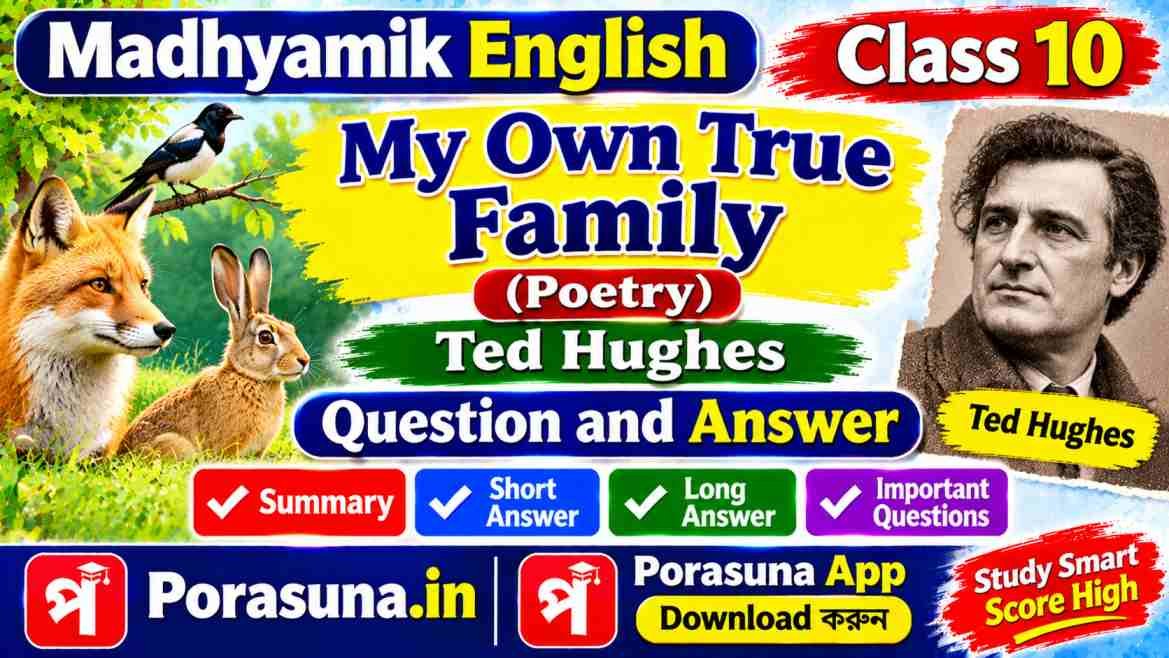
My Own True Family (Poetry) Ted Hughes – Madhyamik English Question and Answer
মাই ওন ট্রু ফ্যামিলি – মাধ্যমিক ইংরেজি প্রশ্ন ও উত্তর
My Own True Family (Poetry) Ted Hughes – দশম শ্রেণির ইংরেজি | মাই ওন ট্রু ফ্যামিলি – মাধ্যমিক ইংরেজি: নমস্কার বন্ধুরা, আজকের আলোচনার বিষয় ‘My Own True Family’ (Poetry) – Ted Hughes, যা মাধ্যমিক দশম শ্রেণির ইংরেজি (WBBSE Madhyamik Class 10 English) বিষয়ের একটি গুরুত্বপূর্ণ পাঠ। এই পোস্টে My Own True Family (Poetry) Ted Hughes – Madhyamik English Question and Answer | মাই ওন ট্রু ফ্যামিলি – মাধ্যমিক ইংরেজি -এর থেকে গুরুত্বপূর্ণ MCQ, SAQ, সংক্ষিপ্ত প্রশ্নোত্তর, বর্ণনামূলক প্রশ্নোত্তর এবং Notes সুন্দরভাবে সাজিয়ে দেওয়া হয়েছে। মাধ্যমিক ইংরেজি পরীক্ষার প্রস্তুতির জন্য এই প্রশ্ন ও উত্তরগুলি ভালোভাবে পড়া এবং অনুশীলন করা অত্যন্ত উপকারী।
যেসব ছাত্রছাত্রী My Own True Family (Poetry) Ted Hughes – মাধ্যমিক দশম শ্রেণির ইংরেজি প্রশ্ন ও উত্তর, WBBSE মাই ওন ট্রু ফ্যামিলি – মাধ্যমিক ইংরেজি অথবা পরীক্ষার গুরুত্বপূর্ণ ইংরেজি প্রশ্নোত্তর খুঁজছো, তারা এই পোস্টটি সম্পূর্ণভাবে পড়তে পারো। My Own True Family Poetry থেকে পরীক্ষায় গুরুত্বপূর্ণ হতে পারে এমন বিভিন্ন ধরনের প্রশ্ন ও উত্তর এখানে সহজ ভাষায় দেওয়া হয়েছে, যা West Bengal Madhyamik Class 10 English Exam Preparation এবং Revision-এর সময় বিশেষভাবে কাজে আসবে।
| বোর্ড | ডাব্লিউ বি সি এইচ এস ই (WBBSE) |
| ক্লাস | মাধ্যমিক দশম শ্রেণী (WB Class 10 Madhyamik) |
| বিষয় | মাধ্যমিক ইংরেজি (Madhyamik English) |
| পাঠ | My Own True Family (Poetry) Ted Hughes |
My Own True Family (Poetry) Ted Hughes – West Bengal Madhyamik Class 10 English Question and Answer | মাই ওন ট্রু ফ্যামিলি – মাধ্যমিক ইংরেজি
MCQ : My Own True Family (Poetry) Ted Hughes – Madhyamik English Question and Answer | মাই ওন ট্রু ফ্যামিলি – মাধ্যমিক ইংরেজি [প্রশ্নমান – ১]
- The poet crept into a/an —
[কবি কোথায় চুপিসারে প্রবেশ করেছিলেন?]
(A) Pine wood [পাইন বন]
(B) Oak-wood [ওক বন]
(C) Rose garden [গোলাপ বাগান]
(D) Open field [খোলা মাঠ]
Answer: (B) Oak-wood
- The poet was looking for a —
[কবি কাকে খুঁজছিলেন?]
(A) Deer [হরিণ]
(B) Stag [পুরুষ হরিণ]
(C) Doe [স্ত্রী হরিণ]
(D) Fox [শিয়াল]
Answer: (B) Stag
- In the wood, the poet met a/an —
[বনে কবি কার সঙ্গে দেখা করেছিলেন?]
(A) Old man [বৃদ্ধ ব্যক্তি]
(B) Young girl [যুবতী]
(C) Old woman [বৃদ্ধা মহিলা]
(D) Little boy [ছোট ছেলে]
Answer: (C) Old woman
- The old woman was —
[বৃদ্ধা মহিলাটি কেমন ছিলেন?]
(A) Rich and well-dressed [ধনী ও সুসজ্জিত]
(B) Young and beautiful [যুবতী ও সুন্দরী]
(C) All knobbly stick and rag [গাঁটযুক্ত লাঠি ও ছেঁড়া কাপড়ের মতো]
(D) Tall and strong [লম্বা ও শক্তিশালী]
Answer: (C) All knobbly stick and rag
- The old woman had the poet’s secret inside her —
[বৃদ্ধা মহিলার কাছে কবির গোপন বিষয়টি কোথায় ছিল?]
(A) Pocket [পকেট]
(B) Little bag [ছোট ব্যাগ]
(C) Wooden box [কাঠের বাক্স]
(D) Hand [হাত]
Answer: (B) Little bag
- When the woman began to cackle, the poet began to —
[মহিলাটি যখন অট্টহাসি শুরু করলেন, কবি কী করতে শুরু করলেন?]
(A) Run [দৌড়াতে]
(B) Shout [চিৎকার করতে]
(C) Quake [কাঁপতে]
(D) Laugh [হাসতে]
Answer: (C) Quake
- The poet came twice awake when the old woman —
[বৃদ্ধা মহিলা যখন কী করলেন, তখন কবি দুবার জেগে উঠলেন?]
(A) Touched him [তাঁকে স্পর্শ করলেন]
(B) Spoke to him [তাঁর সঙ্গে কথা বললেন]
(C) Opened her little bag [তাঁর ছোট ব্যাগ খুললেন]
(D) Showed him the secret [তাঁকে গোপন বিষয়টি দেখালেন]
Answer: (C) Opened her little bag
- The poet was surrounded by a —
[কবি কাদের দ্বারা পরিবেষ্টিত হয়েছিলেন?]
(A) Group of animals [একদল পশু]
(B) Staring tribe [তাকিয়ে থাকা এক গোষ্ঠী]
(C) Crowd of people [একদল মানুষ]
(D) Circle of fire [আগুনের বৃত্ত]
Answer: (B) Staring tribe
- The ‘staring tribe’ refers to the —
[‘Staring tribe’ কাদের বোঝায়?]
(A) Pine trees [পাইন গাছ]
(B) Old women [বৃদ্ধা মহিলারা]
(C) Villagers [গ্রামবাসীরা]
(D) Oak-trees [ওক গাছগুলি]
Answer: (D) Oak-trees
- The poet was tied to a —
[কবিকে কোথায় বেঁধে রাখা হয়েছিল?]
(A) Stake [খুঁটি]
(B) Tree [গাছ]
(C) Chair [চেয়ার]
(D) Post [পোস্ট]
Answer: (A) Stake
- The oak-trees said that they were the poet’s —
[ওক গাছগুলি বলেছিল যে তারা কবির কী?]
(A) Enemies [শত্রু]
(B) Best friends [সেরা বন্ধু]
(C) Own true family [নিজের প্রকৃত পরিবার]
(D) Distant relatives [দূরসম্পর্কের আত্মীয়]
Answer: (C) Own true family
- The oak-trees complain that they are —
[ওক গাছগুলি অভিযোগ করেছিল যে তাদের কী করা হয়?]
(A) Watered daily [প্রতিদিন জল দেওয়া হয়]
(B) Chopped down and torn up [কেটে ফেলা হয় ও উপড়ে ফেলা হয়]
(C) Never worshipped [কখনো পূজা করা হয় না]
(D) Growing too old [অত্যন্ত বৃদ্ধ হয়ে যাচ্ছে]
Answer: (B) Chopped down and torn up
- The promise the poet had to make was to plant —
[কবিকে কী গাছ লাগানোর প্রতিশ্রুতি দিতে হয়েছিল?]
(A) One tree for every one felled [প্রতিটি কাটা গাছের জন্য একটি গাছ]
(B) A hundred trees [একশোটি গাছ]
(C) Two trees for every one felled [প্রতিটি কাটা গাছের জন্য দুটি গাছ]
(D) A new forest [একটি নতুন বন]
Answer: (C) Two trees for every one felled
- The penalty for breaking the promise would be that the black oak bark would —
[প্রতিশ্রুতি ভাঙলে শাস্তি হিসেবে কালো ওক গাছের ছাল কী করবে?]
(A) Fall on him [তার ওপর পড়বে]
(B) Turn him to stone [তাকে পাথরে পরিণত করবে]
(C) Make him blind [তাকে অন্ধ করবে]
(D) Wrinkle over him [তার শরীরের ওপর কুঁচকে জড়িয়ে যাবে]
Answer: (D) Wrinkle over him
- After the dream, the poet came out of the —
[স্বপ্নের পর কবি কোথা থেকে বেরিয়ে এসেছিলেন?]
(A) Pine wood [পাইন বন]
(B) House [বাড়ি]
(C) Oak-wood [ওক বন]
(D) Trance [ঘোর]
Answer: (C) Oak-wood
- After the experience, the poet’s walk was that of a human child, but his heart was a —
[অভিজ্ঞতার পর কবির হাঁটা ছিল মানবশিশুর মতো, কিন্তু তাঁর হৃদয় কী হয়ে গিয়েছিল?]
(A) Stone [পাথর]
(B) Stag [পুরুষ হরিণ]
(C) Tree [গাছ]
(D) Bird [পাখি]
Answer: (C) Tree
- The poet of the poem ‘My Own True Family’ is —
[‘My Own True Family’ কবিতার কবি কে?]
(A) William Blake [উইলিয়াম ব্লেক]
(B) Ted Hughes [টেড হিউজ]
(C) W. B. Yeats [ডব্লিউ বি ইয়েটস]
(D) John Masefield [জন মেসফিল্ড]
Answer: (B) Ted Hughes
- The word ‘cackle’ means —
[‘Cackle’ শব্দটির অর্থ কী?]
(A) A soft whisper [মৃদু ফিসফিসানি]
(B) A loud, harsh laugh [জোরে ও কর্কশ হাসি]
(C) A cry of pain [যন্ত্রণার কান্না]
(D) A gentle song [মৃদু গান]
Answer: (B) A loud, harsh laugh
- The word ‘quake’ means to —
[‘Quake’ শব্দটির অর্থ কী?]
(A) Stand still [স্থির থাকা]
(B) Tremble or shake [কাঁপা]
(C) Feel happy [খুশি হওয়া]
(D) Become angry [রেগে যাওয়া]
Answer: (B) Tremble or shake
- The oak-trees said, “We are chopped down, we are —”
[ওক গাছগুলি বলেছিল, “আমাদের কেটে ফেলা হয়, আমাদের —”]
(A) Thrown away [ফেলে দেওয়া হয়]
(B) Burnt up [পুড়িয়ে দেওয়া হয়]
(C) Torn up [উপড়ে ফেলা হয়]
(D) Sold out [বিক্রি করে দেওয়া হয়]
Answer: (C) Torn up
- The poem is written in the —
[কবিতাটি কোন পুরুষে লেখা হয়েছে?]
(A) First person [প্রথম পুরুষ]
(B) Second person [দ্বিতীয় পুরুষ]
(C) Third person [তৃতীয় পুরুষ]
(D) A mix of all three [তিনটির মিশ্রণ]
Answer: (A) First person
- The central theme of the poem is —
[কবিতার মূল বিষয় কী?]
(A) The beauty of oak-trees [ওক গাছের সৌন্দর্য]
(B) A child’s dream [একটি শিশুর স্বপ্ন]
(C) The need to protect our natural environment [প্রাকৃতিক পরিবেশ রক্ষার প্রয়োজনীয়তা]
(D) The fear of old women [বৃদ্ধা মহিলাদের ভয়]
Answer: (C) The need to protect our natural environment
- The stag the poet was looking for symbolizes —
[কবি যে পুরুষ হরিণটি খুঁজছিলেন, সেটি কী প্রতীক?]
(A) A hunting target [শিকারের লক্ষ্য]
(B) An ordinary animal [একটি সাধারণ পশু]
(C) Ideal, unspoilt nature [আদর্শ ও অবিকৃত প্রকৃতি]
(D) A magical creature [একটি জাদুকরী প্রাণী]
Answer: (C) Ideal, unspoilt nature
- The old woman represents —
[বৃদ্ধা মহিলা কাকে বা কী প্রতিনিধিত্ব করেন?]
(A) A poor beggar [একজন দরিদ্র ভিখারি]
(B) A witch [একজন ডাইনি]
(C) The spirit of nature or Mother Earth [প্রকৃতির আত্মা বা ধরিত্রীমাতা]
(D) The poet’s grandmother [কবির ঠাকুমা/দিদিমা]
Answer: (C) The spirit of nature or Mother Earth
- The experience in the oak-wood was a/an —
[ওক বনে কবির অভিজ্ঞতাটি কেমন ছিল?]
(A) Real encounter [বাস্তব সাক্ষাৎ]
(B) Ordinary walk [সাধারণ হাঁটাচলা]
(C) Dream-like, visionary experience [স্বপ্নময় ও অলৌকিক দর্শনের অভিজ্ঞতা]
(D) Nightmare [দুঃস্বপ্ন]
Answer: (C) Dream-like, visionary experience
- The oak-trees threatened to kill the poet if he did not —
[ওক গাছগুলি কবিকে হত্যা করার হুমকি দিয়েছিল যদি তিনি কী না করেন?]
(A) Leave the wood [বন ছেড়ে না যান]
(B) Worship them [তাদের পূজা না করেন]
(C) Make a promise [একটি প্রতিশ্রুতি না দেন]
(D) Water them [তাদের জল না দেন]
Answer: (C) Make a promise
- The line “You do not blink an eye” suggests human —
[“You do not blink an eye” লাইনটি মানুষের কী বোঝায়?]
(A) Indifference [উদাসীনতা]
(B) Cruelty [নিষ্ঠুরতা]
(C) Fearlessness [নির্ভীকতা]
(D) Love for nature [প্রকৃতির প্রতি ভালোবাসা]
Answer: (A) Indifference
- The final transformation of the poet was —
[কবির শেষ পরিবর্তনটি কেমন ছিল?]
(A) Physical [শারীরিক]
(B) Only a dream [শুধুমাত্র স্বপ্ন]
(C) Temporary [সাময়িক]
(D) Spiritual and internal [আধ্যাত্মিক ও অন্তর্নিহিত]
Answer: (D) Spiritual and internal
- “This was my dream beneath the boughs” – ‘boughs’ refers to —
[“This was my dream beneath the boughs” – ‘boughs’ বলতে কী বোঝায়?]
(A) Clouds [মেঘ]
(B) Roots [শিকড়]
(C) Branches of trees [গাছের শাখা]
(D) Leaves [পাতা]
Answer: (C) Branches of trees
- The word ‘felled’ means —
[‘Felled’ শব্দটির অর্থ কী?]
(A) Planted [রোপণ করা]
(B) Grown [বড় হওয়া]
(C) Fallen naturally [স্বাভাবিকভাবে পড়ে যাওয়া]
(D) Cut down [কেটে ফেলা]
Answer: (D) Cut down
- The poem is a warning against —
[কবিতাটি কিসের বিরুদ্ধে সতর্কবার্তা?]
(A) Entering woods alone [একাকী বনে প্রবেশ করা]
(B) Talking to old women [বৃদ্ধা মহিলাদের সঙ্গে কথা বলা]
(C) Mindless deforestation [বিবেচনাহীন বন ধ্বংস]
(D) Making promises [প্রতিশ্রুতি দেওয়া]
Answer: (C) Mindless deforestation
- The phrase “staring tribe” creates an atmosphere of —
[“Staring tribe” শব্দবন্ধটি কেমন পরিবেশ সৃষ্টি করে?]
(A) Friendliness [বন্ধুত্বপূর্ণ]
(B) Menace and judgment [হুমকি ও বিচারমূলক]
(C) Celebration [উৎসব]
(D) Sadness [দুঃখ]
Answer: (B) Menace and judgment
- The poet’s secret that the woman held was his —
[মহিলার কাছে থাকা কবির গোপন বিষয়টি কী ছিল?]
(A) Name [নাম]
(B) Address [ঠিকানা]
(C) Human indifference to nature [প্রকৃতির প্রতি মানুষের উদাসীনতা]
(D) Love for animals [পশুদের প্রতি ভালোবাসা]
Answer: (C) Human indifference to nature
- The oak-trees wanted the poet to —
[ওক গাছগুলি কবিকে কী করতে চেয়েছিল?]
(A) Leave [চলে যেতে]
(B) Swear [শপথ করতে]
(C) Sing [গান গাইতে]
(D) Fight [লড়াই করতে]
Answer: (B) Swear
- The poem suggests that true family is based on —
[কবিতাটি ইঙ্গিত দেয় যে প্রকৃত পরিবার কিসের ওপর ভিত্তি করে গড়ে ওঠে?]
(A) Blood relations [রক্তের সম্পর্ক]
(B) Social status [সামাজিক মর্যাদা]
(C) A deep, empathetic connection [গভীর সহানুভূতিশীল সম্পর্ক]
(D) Living in the same house [একই বাড়িতে বসবাস]
Answer: (C) A deep, empathetic connection
- What would root the poet among the oaks?
[কী কবিকে ওক গাছগুলির মধ্যে শিকড়ের মতো বেঁধে ফেলত?]
(A) The black oak bark [কালো ওক গাছের ছাল]
(B) The old woman’s magic [বৃদ্ধা মহিলার জাদু]
(C) A broken promise [ভাঙা প্রতিশ্রুতি]
(D) The staring tribe [তাকিয়ে থাকা গোষ্ঠী]
Answer: (A) The black oak bark
- The phrase ‘twice awake’ implies a/an —
[‘Twice awake’ শব্দবন্ধটি কী বোঝায়?]
(A) Literal awakening from sleep [ঘুম থেকে আক্ষরিকভাবে জেগে ওঠা]
(B) State of confusion [বিভ্রান্তির অবস্থা]
(C) Spiritual awakening or sudden realization [আধ্যাত্মিক জাগরণ বা আকস্মিক উপলব্ধি]
(D) Feeling of déjà vu [আগে ঘটেছে এমন অনুভূতি]
Answer: (C) Spiritual awakening or sudden realization
- The tone of the oak-trees is —
[ওক গাছগুলির বক্তব্যের সুর কেমন?]
(A) Forgiving [ক্ষমাশীল]
(B) Friendly [বন্ধুত্বপূর্ণ]
(C) Accusatory and threatening [অভিযোগমূলক ও হুমকিপূর্ণ]
(D) Sad and pleading [দুঃখপূর্ণ ও অনুনয়মূলক]
Answer: (C) Accusatory and threatening
- The poem advocates for —
[কবিতাটি কিসের পক্ষে সমর্থন জানায়?]
(A) Industrialization [শিল্পায়ন]
(B) Urbanization [নগরায়ন]
(C) Afforestation [বনসৃজন]
(D) Hunting [শিকার]
Answer: (C) Afforestation
- The dream ‘altered’ the poet, meaning it —
[স্বপ্নটি কবিকে ‘altered’ করেছিল, অর্থাৎ এটি তাঁকে কী করেছিল?]
(A) Frightened him [ভয় পাইয়ে দিয়েছিল]
(B) Made him sad [দুঃখিত করেছিল]
(C) Changed him deeply [গভীরভাবে পরিবর্তিত করেছিল]
(D) Made him famous [বিখ্যাত করেছিল]
Answer: (C) Changed him deeply
[Madhyamik English Suggestion Click Here]
VSAQ : My Own True Family (Poetry) Ted Hughes – Madhyamik English Question and Answer | মাই ওন ট্রু ফ্যামিলি – মাধ্যমিক ইংরেজি [প্রশ্নমান – ১]
- Who is the poet of “My Own True Family”?
[“My Own True Family” কবিতার কবি কে?]
Answer: Ted Hughes. - Where did the poet creep into?
[কবি কোথায় চুপিসারে প্রবেশ করেছিলেন?]
Answer: The poet crept into an oak-wood. - What was the poet looking for in the wood?
[কবি বনে কী খুঁজছিলেন?]
Answer: He was looking for a stag. - Whom did the poet meet in the oak-wood?
[কবি ওক বনে কার সঙ্গে দেখা করেছিলেন?]
Answer: He met an old woman. - How was the old woman described?
[বৃদ্ধা মহিলাকে কীভাবে বর্ণনা করা হয়েছে?]
Answer: She was all knobbly stick and rag. - Where did the old woman keep the poet’s secret?
[বৃদ্ধা মহিলা কবির গোপন বিষয়টি কোথায় রেখেছিলেন?]
Answer: She kept it inside her little bag. - What did the old woman do with her little bag?
[বৃদ্ধা মহিলা তাঁর ছোট ব্যাগটি কী করেছিলেন?]
Answer: She opened her little bag. - What happened when the old woman began to cackle?
[বৃদ্ধা মহিলা অট্টহাসি শুরু করলে কী ঘটেছিল?]
Answer: The poet began to quake. - What does the word ‘cackle’ mean?
[‘Cackle’ শব্দটির অর্থ কী?]
Answer: It means a loud, harsh laugh. - What does the word ‘quake’ mean?
[‘Quake’ শব্দটির অর্থ কী?]
Answer: It means to tremble or shake. - What surrounded the poet in the wood?
[বনে কবিকে কী ঘিরে ধরেছিল?]
Answer: A staring tribe surrounded him. - What does the ‘staring tribe’ refer to?
[‘Staring tribe’ বলতে কাদের বোঝায়?]
Answer: It refers to the oak-trees. - Where was the poet tied?
[কবিকে কোথায় বেঁধে রাখা হয়েছিল?]
Answer: He was tied to a stake. - What did the oak-trees call themselves?
[ওক গাছগুলি নিজেদের কী বলেছিল?]
Answer: They called themselves the poet’s own true family. - What complaint did the oak-trees make?
[ওক গাছগুলি কী অভিযোগ করেছিল?]
Answer: They complained that they were chopped down and torn up. - What promise did the poet have to make?
[কবিকে কী প্রতিশ্রুতি দিতে হয়েছিল?]
Answer: He had to promise to plant two trees for every one felled. - What does ‘felled’ mean?
[‘Felled’ শব্দটির অর্থ কী?]
Answer: It means cut down. - What would happen if the poet broke his promise?
[কবি প্রতিশ্রুতি ভাঙলে কী ঘটত?]
Answer: The black oak bark would wrinkle over him. - From where did the poet come out after the dream?
[স্বপ্নের পর কবি কোথা থেকে বেরিয়ে এসেছিলেন?]
Answer: He came out of the oak-wood. - What was the poet’s walk like after the experience?
[অভিজ্ঞতার পর কবির হাঁটা কেমন ছিল?]
Answer: His walk was that of a human child. - What was the poet’s heart like after the dream?
[স্বপ্নের পর কবির হৃদয় কেমন হয়ে গিয়েছিল?]
Answer: His heart was like a tree. - What does the stag symbolize in the poem?
[কবিতায় পুরুষ হরিণটি কী প্রতীক?]
Answer: It symbolizes ideal, unspoilt nature. - What does the old woman represent?
[বৃদ্ধা মহিলা কাকে প্রতিনিধিত্ব করেন?]
Answer: She represents the spirit of nature or Mother Earth. - What is the central theme of the poem?
[কবিতার মূল বিষয় কী?]
Answer: The poem highlights the need to protect nature. - What does the phrase ‘my own true family’ refer to?
[‘My own true family’ কথাটি কাদের বোঝায়?]
Answer: It refers to the oak-trees and the natural world. - What is the meaning of ‘boughs’?
[‘Boughs’ শব্দটির অর্থ কী?]
Answer: It means branches of trees. - What does the poem warn us against?
[কবিতাটি আমাদের কিসের বিরুদ্ধে সতর্ক করে?]
Answer: It warns us against mindless deforestation. - What does the line “You do not blink an eye” suggest?
[“You do not blink an eye” লাইনটি কী বোঝায়?]
Answer: It suggests human indifference towards nature. - What kind of experience did the poet have in the oak-wood?
[ওক বনে কবির কী ধরনের অভিজ্ঞতা হয়েছিল?]
Answer: He had a dream-like, visionary experience. - What did the oak-trees want the poet to do?
[ওক গাছগুলি কবিকে কী করতে চেয়েছিল?]
Answer: They wanted him to swear to plant trees. - What is the tone of the oak-trees?
[ওক গাছগুলির বক্তব্যের সুর কেমন?]
Answer: Their tone is accusatory and threatening. - What does ‘twice awake’ suggest?
[‘Twice awake’ কী বোঝায়?]
Answer: It suggests a spiritual awakening or sudden realization. - What does the poem advocate?
[কবিতাটি কিসের পক্ষে সমর্থন জানায়?]
Answer: It advocates afforestation and the protection of nature. - How did the dream change the poet?
[স্বপ্নটি কবিকে কীভাবে পরিবর্তিত করেছিল?]
Answer: It changed his attitude towards nature deeply. - What message does the poem convey?
[কবিতাটি কী বার্তা দেয়?]
Answer: It conveys that human beings are part of nature and must protect it.
[Madhyamik Suggestion Click Here]
SAQ : My Own True Family (Poetry) Ted Hughes – Madhyamik English Question and Answer | মাই ওন ট্রু ফ্যামিলি – মাধ্যমিক ইংরেজি [প্রশ্নমান – ২/৩]
- What was the poet looking for in the oak-wood, and what did he find instead?
[কবি ওক বনে কী খুঁজছিলেন এবং পরিবর্তে কী পেয়েছিলেন?]
Answer: The poet was looking for a stag in the oak-wood. Instead of a stag, he found an old woman who was poorly dressed, carrying a “knobbly stick” and a “little bag”.
[কবি ওক বনে একটি পুরুষ হরিণ খুঁজছিলেন। কিন্তু হরিণের পরিবর্তে তিনি একজন বৃদ্ধা মহিলাকে দেখতে পান, যিনি জীর্ণ পোশাক পরেছিলেন এবং একটি “knobbly stick” ও একটি “little bag” বহন করছিলেন।] - Describe the appearance of the old woman.
[বৃদ্ধা মহিলার চেহারা বর্ণনা করো।]
Answer: The old woman had a frail and impoverished appearance. The poet describes her as “all knobbly stick and rag”, suggesting that she was bent, weak and dressed in tattered clothes.
[বৃদ্ধা মহিলার চেহারা ছিল দুর্বল ও দরিদ্র। কবি তাঁকে “all knobbly stick and rag” বলে বর্ণনা করেছেন, যা তাঁর বাঁকা, দুর্বল শরীর ও ছেঁড়া পোশাকের ইঙ্গিত দেয়।] - What was the ‘secret’ the old woman had in her bag?
[বৃদ্ধা মহিলার ব্যাগে থাকা ‘secret’ কী ছিল?]
Answer: The secret symbolised the poet’s conscience and his hidden connection with nature. It represented humanity’s destructive relationship with the natural world, which the poet was about to discover.
[গোপন বিষয়টি কবির বিবেক ও প্রকৃতির সঙ্গে তাঁর অন্তর্নিহিত সম্পর্কের প্রতীক ছিল। এটি প্রকৃতির সঙ্গে মানুষের ধ্বংসাত্মক সম্পর্ককে নির্দেশ করে, যা কবি উপলব্ধি করতে চলেছিলেন।] - What is meant by the phrase “I came twice awake”?
[“I came twice awake” কথাটির অর্থ কী?]
Answer: The phrase suggests a profound spiritual awakening and a deeper level of consciousness. It implies that the poet awoke not only from his dream-like trance but also to a new understanding of his relationship with nature.
[এই কথাটি গভীর আধ্যাত্মিক জাগরণ ও চেতনার উচ্চতর স্তরকে বোঝায়। এটি ইঙ্গিত করে যে কবি শুধু স্বপ্নের ঘোর থেকে জেগে ওঠেননি, প্রকৃতির সঙ্গে তাঁর সম্পর্ক সম্পর্কেও নতুন উপলব্ধি লাভ করেছিলেন।] - Who was the ‘staring tribe’ and what did they do to the poet?
[‘Staring tribe’ কারা ছিল এবং তারা কবির সঙ্গে কী করেছিল?]
Answer: The ‘staring tribe’ was the community of oak-trees in the wood. They surrounded the poet and tied him to a stake, holding him accountable for humanity’s destructive actions.
[‘Staring tribe’ ছিল বনের ওক গাছগুলির সমষ্টি। তারা কবিকে ঘিরে ধরে একটি খুঁটির সঙ্গে বেঁধে রাখে এবং মানবজাতির ধ্বংসাত্মক কাজের জন্য তাঁকে দায়ী করে।] - What was the complaint of the oak-trees?
[ওক গাছগুলির অভিযোগ কী ছিল?]
Answer: The oak-trees complained that humans were destroying them without any concern. They said that they were being “chopped down” and “torn up”, while humans did not “blink an eye” or show any remorse.
[ওক গাছগুলি অভিযোগ করেছিল যে মানুষ কোনো চিন্তা না করেই তাদের ধ্বংস করছে। তারা বলেছিল যে তাদের “chopped down” ও “torn up” করা হচ্ছে, অথচ মানুষ এতে কোনো উদ্বেগ বা অনুশোচনা প্রকাশ করছে না।] - What promise did the oak-trees extract from the poet?
[ওক গাছগুলি কবির কাছ থেকে কী প্রতিশ্রুতি আদায় করেছিল?]
Answer: The oak-trees forced the poet to promise that he would plant two trees for every tree felled. The promise symbolised regeneration and conservation.
[ওক গাছগুলি কবিকে প্রতিটি কাটা গাছের পরিবর্তে দুটি গাছ লাগানোর প্রতিশ্রুতি দিতে বাধ্য করেছিল। এই প্রতিশ্রুতি পুনরুজ্জীবন ও সংরক্ষণের প্রতীক।] - What was the penalty for failing to keep the promise?
[প্রতিশ্রুতি পালন না করলে কী শাস্তি হতো?]
Answer: If the poet broke his promise, the “black oak bark” would wrinkle over him. He would be rooted among the oaks, symbolically losing his separate human identity.
[কবি প্রতিশ্রুতি ভাঙলে “black oak bark” তাঁর শরীরের ওপর কুঁচকে জড়িয়ে যাবে। তিনি ওক গাছগুলির মধ্যে শিকড়বদ্ধ হয়ে পড়বেন এবং প্রতীকীভাবে তাঁর পৃথক মানব পরিচয় হারাবেন।] - Explain the line: “We are your own true family.”
[“We are your own true family” লাইনটি ব্যাখ্যা করো।]
Answer: The line suggests that humanity’s true identity and origin lie in nature. The oak-trees claim a deeper connection with the poet, implying that all life is interconnected and humans are an integral part of nature.
[লাইনটি বোঝায় যে মানবজাতির প্রকৃত পরিচয় ও উৎস প্রকৃতির মধ্যে নিহিত। ওক গাছগুলি কবির সঙ্গে গভীর সম্পর্কের দাবি করে, যা বোঝায় যে সমস্ত জীব পরস্পর সংযুক্ত এবং মানুষ প্রকৃতির অবিচ্ছেদ্য অংশ।] - What transformation did the poet undergo at the end of the poem?
[কবিতার শেষে কবির কী পরিবর্তন ঘটেছিল?]
Answer: The poet underwent a profound internal transformation. Although his outward appearance remained that of a human child, his heart became a “tree”, symbolising deep empathy and a living connection with nature.
[কবির গভীর অন্তর্নিহিত পরিবর্তন ঘটেছিল। বাইরে তিনি মানবশিশুর মতোই ছিলেন, কিন্তু তাঁর হৃদয় একটি “tree” হয়ে গিয়েছিল, যা প্রকৃতির প্রতি গভীর সহানুভূতি ও জীবন্ত সম্পর্কের প্রতীক।] - Why is the poem titled ‘My Own True Family’?
[কবিতাটির নাম ‘My Own True Family’ কেন?]
Answer: The poem is titled ‘My Own True Family’ because it reveals that nature, represented by the oak-trees, is humanity’s true family. The title highlights the deep and forgotten kinship between humans and the natural world.
[কবিতাটির নাম ‘My Own True Family’ কারণ এটি প্রকাশ করে যে ওক গাছের মাধ্যমে প্রতিনিধিত্ব করা প্রকৃতিই মানবজাতির প্রকৃত পরিবার। নামটি মানুষ ও প্রকৃতির মধ্যে গভীর অথচ বিস্মৃত আত্মীয়তার সম্পর্ক তুলে ধরে।] - What does the “black oak bark” symbolize?
[“Black oak bark” কীসের প্রতীক?]
Answer: The “black oak bark” symbolises the power and wrath of nature. It represents the consequences of betraying nature, when nature reclaims an individual and merges him into the forest.
[“Black oak bark” প্রকৃতির শক্তি ও ক্রোধের প্রতীক। এটি প্রকৃতির সঙ্গে বিশ্বাসঘাতকতার পরিণতি বোঝায়, যখন প্রকৃতি মানুষকে নিজের মধ্যে ফিরিয়ে নিয়ে বনজগতের সঙ্গে একীভূত করে।] - What is the role of the dream in the poem?
[কবিতায় স্বপ্নের ভূমিকা কী?]
Answer: The dream serves as the main narrative device through which the poet receives a profound spiritual lesson. It allows him to encounter the speaking oak-trees and confront a truth that he might otherwise ignore.
[স্বপ্নটি কবির গভীর আধ্যাত্মিক শিক্ষা লাভের প্রধান মাধ্যম হিসেবে কাজ করে। এর মাধ্যমে তিনি কথা বলা ওক গাছগুলির সঙ্গে সাক্ষাৎ করেন এবং এমন একটি সত্যের মুখোমুখি হন, যা অন্যথায় তিনি উপেক্ষা করতে পারতেন।] - Why did the poet “quake” when the old woman began to “cackle”?
[বৃদ্ধা মহিলা “cackle” শুরু করলে কবি কেন “quake” করেছিলেন?]
Answer: The poet began to quake with fear. The old woman’s strange appearance and harsh, unsettling laugh created a mysterious and threatening atmosphere, making him feel frightened and vulnerable.
[কবি ভয়ে কাঁপতে শুরু করেছিলেন। বৃদ্ধা মহিলার অদ্ভুত চেহারা ও কর্কশ, অস্বস্তিকর হাসি একটি রহস্যময় ও ভীতিকর পরিবেশ সৃষ্টি করেছিল, যা তাঁকে আতঙ্কিত ও অসহায় করে তুলেছিল।] - What does the poet’s search for a ‘stag’ signify?
[কবির ‘stag’ খোঁজার অর্থ কী?]
Answer: The search for a ‘stag’, a majestic and elusive animal, signifies humanity’s search for an ideal and pure connection with nature. Instead, the poet encounters the harsh reality of nature’s suffering.
[‘Stag’ বা মহিমান্বিত ও দুর্লভ পুরুষ হরিণের সন্ধান প্রকৃতির সঙ্গে আদর্শ ও বিশুদ্ধ সম্পর্ক খোঁজার প্রতীক। কিন্তু কবি পরিবর্তে প্রকৃতির দুর্দশার কঠোর বাস্তবতার মুখোমুখি হন।] - “Unless you swear the black oak bark will wrinkle over you.” – What is the tone of this line?
[“Unless you swear the black oak bark will wrinkle over you.” – লাইনটির সুর কেমন?]
Answer: The tone of the line is threatening and ominous. It is a direct warning from the oak-trees, highlighting the serious consequences of ignoring their demand.
[লাইনটির সুর হুমকিপূর্ণ ও অশুভ ইঙ্গিতপূর্ণ। এটি ওক গাছগুলির সরাসরি সতর্কবার্তা এবং তাদের দাবি উপেক্ষা করার গুরুতর পরিণতি তুলে ধরে।] - How does the poem criticize human indifference?
[কবিতাটি কীভাবে মানুষের উদাসীনতার সমালোচনা করে?]
Answer: The poem criticizes human indifference through the oak-trees’ complaint, “You do not blink an eye.” The phrase shows how humans destroy nature without showing concern or remorse.
[ওক গাছগুলির অভিযোগ “You do not blink an eye” কথাটির মাধ্যমে কবিতাটি মানুষের উদাসীনতার সমালোচনা করে। এই কথাটি বোঝায় যে মানুষ উদ্বেগ বা অনুশোচনা ছাড়াই প্রকৃতিকে ধ্বংস করে।] - “The dream that altered me.” – How did the dream alter the poet?
[“The dream that altered me.” – স্বপ্নটি কবিকে কীভাবে পরিবর্তিত করেছিল?]
Answer: The dream changed the poet’s entire perspective on nature. It replaced his human-centred outlook with deep empathy for trees and a sense of responsibility towards the natural world.
[স্বপ্নটি প্রকৃতি সম্পর্কে কবির সম্পূর্ণ দৃষ্টিভঙ্গি বদলে দিয়েছিল। এটি তাঁর মানবকেন্দ্রিক চিন্তাভাবনার পরিবর্তে গাছের প্রতি গভীর সহানুভূতি ও প্রকৃতির প্রতি দায়িত্ববোধ সৃষ্টি করেছিল।] - Who is the speaker in the poem and what kind of person is he initially?
[কবিতার বক্তা কে এবং প্রথমে তিনি কেমন মানুষ ছিলেন?]
Answer: The speaker is the poet himself. Initially, he appears to be an ordinary human being, unaware of his deep connection with nature and the suffering caused by human actions.
[কবিতার বক্তা হলেন কবি নিজেই। প্রথমে তিনি একজন সাধারণ মানুষ হিসেবে উপস্থিত হন, যিনি প্রকৃতির সঙ্গে নিজের গভীর সম্পর্ক এবং মানুষের কাজের ফলে প্রকৃতির দুর্দশা সম্পর্কে সচেতন নন।] - What is the significance of being “tied to a stake”?
[“Tied to a stake” হওয়ার তাৎপর্য কী?]
Answer: Being “tied to a stake” symbolises being captured and held accountable. It suggests that the poet, representing humanity, is being judged for destructive actions against nature and is powerless before its collective force.
[“Tied to a stake” হওয়া বন্দি হওয়া ও দায়বদ্ধতার প্রতীক। এটি বোঝায় যে মানবজাতির প্রতিনিধি হিসেবে কবি প্রকৃতির বিরুদ্ধে ধ্বংসাত্মক কাজের জন্য বিচারাধীন এবং প্রকৃতির সম্মিলিত শক্তির সামনে অসহায়।] - Why do the oak-trees need a promise from a human?
[ওক গাছগুলি মানুষের কাছ থেকে প্রতিশ্রুতি কেন চায়?]
Answer: The oak-trees need a promise because humans are responsible for their destruction. They want to change a human’s heart and mind to ensure their survival and regeneration.
[ওক গাছগুলি প্রতিশ্রুতি চায় কারণ মানুষই তাদের ধ্বংসের জন্য দায়ী। তাদের বেঁচে থাকা ও পুনরুজ্জীবন নিশ্চিত করার জন্য তারা মানুষের মন ও চিন্তাভাবনা পরিবর্তন করতে চায়।] - Describe the final state of the poet as he leaves the wood.
[বন ছেড়ে যাওয়ার সময় কবির শেষ অবস্থাটি বর্ণনা করো।]
Answer: As he leaves the wood, the poet is outwardly a human child, but inwardly transformed. His “heart was a tree”, indicating his profound sympathy and living connection with nature.
[বন ছেড়ে যাওয়ার সময় কবি বাইরে থেকে মানবশিশুর মতো থাকলেও অন্তরে পরিবর্তিত হয়েছিলেন। তাঁর “heart was a tree”, যা প্রকৃতির প্রতি গভীর সহানুভূতি ও জীবন্ত সম্পর্কের ইঙ্গিত দেয়।] - What message does the poem convey about family?
[পরিবার সম্পর্কে কবিতাটি কী বার্তা দেয়?]
Answer: The poem redefines the concept of family. It suggests that our true family includes the entire web of life and the natural world from which we originate and on which we depend.
[কবিতাটি পরিবারের ধারণাকে নতুনভাবে ব্যাখ্যা করে। এটি বোঝায় যে আমাদের প্রকৃত পরিবার শুধু মানব আত্মীয়দের মধ্যে সীমাবদ্ধ নয়; বরং সমস্ত জীবজগৎ ও প্রকৃতি আমাদের পরিবারের অংশ, যেখান থেকে আমরা এসেছি এবং যার ওপর আমরা নির্ভরশীল।] - In what way is the poem relevant today?
[বর্তমান সময়ে কবিতাটি কীভাবে প্রাসঙ্গিক?]
Answer: The poem is highly relevant because of the ongoing environmental crisis. Its themes of deforestation, human indifference and conservation are more urgent today, making it a powerful call to protect the planet.
[বর্তমান পরিবেশগত সংকটের কারণে কবিতাটি অত্যন্ত প্রাসঙ্গিক। বন ধ্বংস, মানুষের উদাসীনতা ও প্রকৃতি সংরক্ষণের বিষয়গুলি আজ আরও গুরুত্বপূর্ণ, তাই কবিতাটি পৃথিবীকে রক্ষা করার একটি শক্তিশালী আহ্বান।] - What is the role of the oak-wood setting in the poem?
[কবিতায় ওক বনের পরিবেশের ভূমিকা কী?]
Answer: The oak-wood is not merely a background but an active part of the poem. It creates a mysterious space where the human and natural worlds merge, enabling the poet’s visionary experience and spiritual transformation.
[ওক বন শুধু পটভূমি নয়, বরং কবিতার একটি সক্রিয় অংশ। এটি একটি রহস্যময় পরিবেশ সৃষ্টি করে, যেখানে মানব ও প্রাকৃতিক জগত একীভূত হয় এবং কবির অলৌকিক অভিজ্ঞতা ও আধ্যাত্মিক পরিবর্তন সম্ভব হয়।]
Summary : My Own True Family (Poetry) Ted Hughes – Madhyamik English Question and Answer | মাই ওন ট্রু ফ্যামিলি – মাধ্যমিক ইংরেজি
My Own True Family (Poetry) – Summary in English
The poem “My Own True Family” by Ted Hughes describes a dream-like experience that changes the poet’s attitude towards nature. The poet enters an oak-wood in search of a stag but encounters a strange old woman carrying a little bag. When she opens the bag, the poet becomes frightened and finds himself surrounded by a staring tribe of oak-trees. They tie him to a stake and complain that humans are destroying them by cutting them down and tearing them up without any concern. The oak-trees declare that they are his “own true family” and demand that he promise to plant two trees for every tree that is felled. They warn him that if he breaks the promise, the black oak bark will wrinkle over him. The poet leaves the wood with a changed heart. Though he walks like a human child, his heart has become a tree. The poem conveys the message that humans are deeply connected to nature and must protect trees and the natural environment.
মাই ওন ট্রু ফ্যামিলি – বাংলা সারাংশ
টেড হিউজের “My Own True Family” কবিতায় কবির একটি স্বপ্নময় অভিজ্ঞতার কথা বর্ণনা করা হয়েছে, যা প্রকৃতির প্রতি তাঁর দৃষ্টিভঙ্গি বদলে দেয়। কবি একটি পুরুষ হরিণের সন্ধানে ওক বনে প্রবেশ করেন, কিন্তু সেখানে একটি অদ্ভুত বৃদ্ধা মহিলার সঙ্গে দেখা হয়, যিনি একটি ছোট ব্যাগ বহন করছিলেন। মহিলাটি ব্যাগ খুলতেই কবি ভীত হয়ে পড়েন এবং নিজেকে ওক গাছগুলির একটি তাকিয়ে থাকা গোষ্ঠীর দ্বারা পরিবেষ্টিত দেখতে পান। তারা কবিকে একটি খুঁটির সঙ্গে বেঁধে অভিযোগ করে যে মানুষ কোনো উদ্বেগ ছাড়াই তাদের কেটে ফেলছে ও উপড়ে ফেলছে। ওক গাছগুলি নিজেদের কবির “own true family” বলে দাবি করে এবং প্রতিটি কাটা গাছের পরিবর্তে দুটি গাছ লাগানোর প্রতিশ্রুতি দিতে বলে। তারা সতর্ক করে যে কবি প্রতিশ্রুতি ভাঙলে কালো ওক গাছের ছাল তাঁর শরীরের ওপর কুঁচকে জড়িয়ে যাবে। কবি বন থেকে বেরিয়ে আসেন পরিবর্তিত হৃদয় নিয়ে। বাইরে থেকে তিনি মানবশিশুর মতো হাঁটলেও তাঁর হৃদয় একটি গাছ হয়ে গেছে। কবিতাটি বার্তা দেয় যে মানুষ প্রকৃতির সঙ্গে গভীরভাবে যুক্ত এবং গাছ ও প্রাকৃতিক পরিবেশকে রক্ষা করা আমাদের কর্তব্য।
Madhyamik All Subjects Suggestion | মাধ্যমিক সাজেশন:
- Madhyamik Bengali Suggestion Click Here
- Madhyamik English Suggestion Click Here
- Madhyamik History Suggestion Click Here
- Madhyamik Geography Suggestion Click Here
- Madhyamik Life Science Suggestion Click Here
- Madhyamik Mathematics Suggestion Click Here
- Madhyamik Physical Science Suggestion Click Here
- Madhyamik All Subjects Suggestion Click Here
PDF: My Own True Family (Poetry) Ted Hughes – Madhyamik English Question and Answer PDF Download | মাই ওন ট্রু ফ্যামিলি – মাধ্যমিক ইংরেজি
My Own True Family (Poetry) Ted Hughes – Madhyamik English Question and Answer PDF Download | মাই ওন ট্রু ফ্যামিলি – মাধ্যমিক ইংরেজি : My Own True Family (Poetry) Ted Hughes – Madhyamik English Question and Answer সহ একটি PDF File শিক্ষার্থীদের revision-এর সুবিধার জন্য দেওয়া হলো।
PDF Download: My Own True Family (Poetry) Ted Hughes – Madhyamik English Question and Answer PDF Click Here
| আমাদের YouTube Channel টি সাবস্ক্রাইব করুন Click Here To Subscribe Now |
West Bengal Class 10 English Board Exam Details
West Bengal Board of Secondary Education (WBBSE) conducts the Madhyamik Examination for Class 10 students across West Bengal. English is one of the important subjects in the Madhyamik Board Exam, and students need to prepare each chapter carefully according to the prescribed syllabus. Here you will find useful My Own True Family (Poetry) Ted Hughes – Madhyamik English Question and Answer | মাই ওন ট্রু ফ্যামিলি – মাধ্যমিক ইংরেজি, study materials, important questions and other resources to help students prepare effectively for the Class 10 English Board Exam.
Madhyamik English My Own True Family (Poetry) – Ted Hughes Syllabus PDF
Madhyamik English ‘My Own True Family’ (Poetry) – Ted Hughes অধ্যায়ের গুরুত্বপূর্ণ বিষয়গুলি পরীক্ষার প্রস্তুতির জন্য ভালোভাবে জানা প্রয়োজন। এই অধ্যায় থেকে বিভিন্ন ধরনের MCQ, SAQ, সংক্ষিপ্ত প্রশ্নোত্তর এবং বর্ণনামূলক প্রশ্ন পরীক্ষায় আসতে পারে। তাই শিক্ষার্থীদের উচিত সিলেবাস অনুযায়ী অধ্যায়টি মন দিয়ে পড়া এবং গুরুত্বপূর্ণ প্রশ্ন ও উত্তরগুলি বারবার অনুশীলন করা।
Madhyamik English Syllabus PDF: Click Here
My Own True Family (Poetry) Ted Hughes – Madhyamik English Question and Answer | মাই ওন ট্রু ফ্যামিলি – মাধ্যমিক ইংরেজি
My Own True Family (Poetry) Ted Hughes – Madhyamik English Question and Answer | মাই ওন ট্রু ফ্যামিলি – মাধ্যমিক ইংরেজি থেকে মাধ্যমিক দশম শ্রেণির ইংরেজি পরীক্ষার জন্য প্রয়োজনীয় গুরুত্বপূর্ণ প্রশ্ন ও উত্তরগুলি উপরে আলোচনা করা হয়েছে। এখানে অধ্যায়ের বিভিন্ন অংশ থেকে নির্বাচিত MCQ, SAQ, সংক্ষিপ্ত প্রশ্নোত্তর, বর্ণনামূলক প্রশ্নোত্তর এবং Notes সহজ ভাষায় তুলে ধরা হয়েছে। মাধ্যমিক পরীক্ষার প্রস্তুতির সময় শিক্ষার্থীরা এগুলি ভালোভাবে পড়তে এবং নিয়মিত অনুশীলন করতে পারে।
West Bengal WBBSE Madhyamik English My Own True Family (Poetry) – Ted Hughes Suggestion Question and Answer
West Bengal WBBSE Madhyamik English My Own True Family (Poetry) – Ted Hughes Suggestion Question and Answer খুঁজছেন এমন শিক্ষার্থীদের জন্য এই পোস্টে ‘My Own True Family’ Poetry – Ted Hughes অধ্যায়ের গুরুত্বপূর্ণ প্রশ্ন ও উত্তর একসঙ্গে সাজিয়ে দেওয়া হয়েছে। পরীক্ষার আগে দ্রুত Revision করার পাশাপাশি অধ্যায়ের গুরুত্বপূর্ণ বিষয়গুলি বুঝে নেওয়ার ক্ষেত্রেও এই প্রশ্নোত্তরগু,লি সহায়ক হবে।
My Own True Family (Poetry) Ted Hughes – Madhyamik English Question and Answer | মাই ওন ট্রু ফ্যামিলি – মাধ্যমিক ইংরেজি
আশা করি, ‘My Own True Family (Poetry) Ted Hughes – Madhyamik English Question and Answer | মাই ওন ট্রু ফ্যামিলি – মাধ্যমিক ইংরেজি’-এর এই প্রশ্নোত্তরগুলি তোমাদের মাধ্যমিক ইংরেজি পরীক্ষার প্রস্তুতিতে কাজে আসবে। পোস্টটি উপকারী মনে হলে সহপাঠীদের সঙ্গে শেয়ার করতে পারো। West Bengal Board-এর সিলেবাস অনুযায়ী বিভিন্ন শ্রেণির গুরুত্বপূর্ণ অধ্যায়ের Notes, Question Answer, Suggestion ও শিক্ষামূলক বিষয়বস্তু, পাশাপাশি বিভিন্ন চাকরির পরীক্ষার প্রস্তুতির জন্য প্রয়োজনীয় Study Material পেতে নিয়মিত ভিজিট করো Porasuna.in ধন্যবাদ।