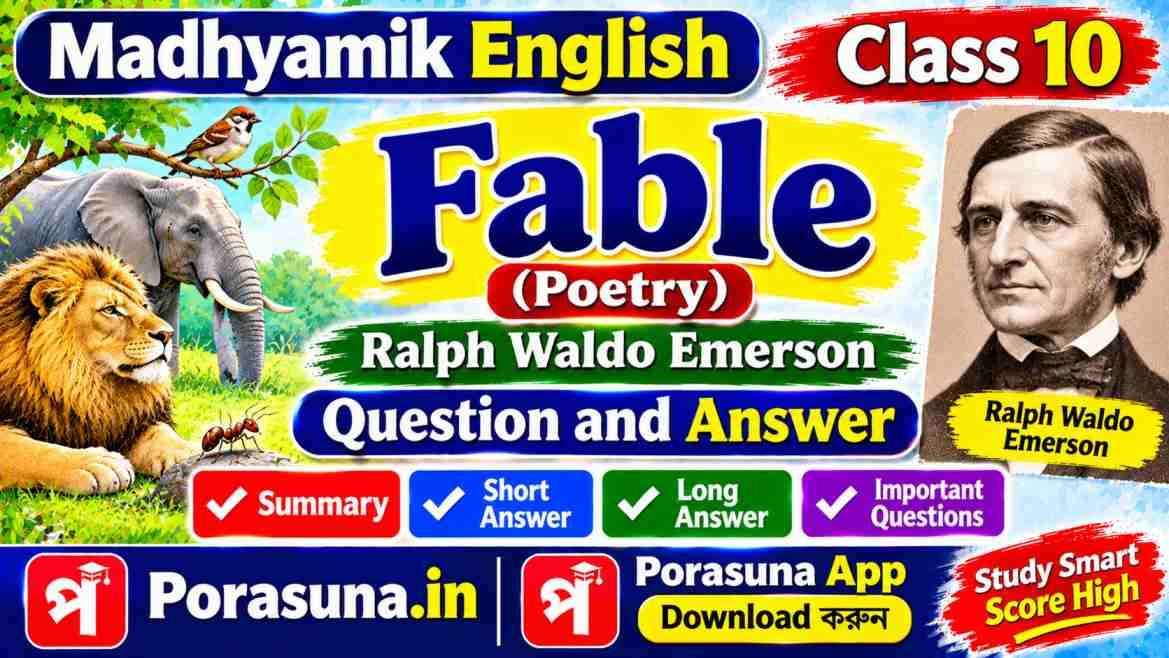
Fable (Poetry) Ralph Waldo Emerson – Madhyamik English Question and Answer
ফাবলে – মাধ্যমিক ইংরেজি প্রশ্ন ও উত্তর
Fable (Poetry) Ralph Waldo Emerson – দশম শ্রেণির ইংরেজি | ফাবলে – মাধ্যমিক ইংরেজি: নমস্কার বন্ধুরা, আজকের আলোচনার বিষয় ‘Fable’ (Poetry) – Ralph Waldo Emerson, যা মাধ্যমিক দশম শ্রেণির ইংরেজি (WBBSE Madhyamik Class 10 English) বিষয়ের একটি গুরুত্বপূর্ণ পাঠ। এই পোস্টে Fable (Poetry) Ralph Waldo Emerson – Madhyamik English Question and Answer | ফাবলে – মাধ্যমিক ইংরেজি -এর থেকে গুরুত্বপূর্ণ MCQ, SAQ, সংক্ষিপ্ত প্রশ্নোত্তর, বর্ণনামূলক প্রশ্নোত্তর এবং Notes সুন্দরভাবে সাজিয়ে দেওয়া হয়েছে। মাধ্যমিক ইংরেজি পরীক্ষার প্রস্তুতির জন্য এই প্রশ্ন ও উত্তরগুলি ভালোভাবে পড়া এবং অনুশীলন করা অত্যন্ত উপকারী।
যেসব ছাত্রছাত্রী Fable (Poetry) Ralph Waldo Emerson – মাধ্যমিক দশম শ্রেণির ইংরেজি প্রশ্ন ও উত্তর, WBBSE ফাবলে – মাধ্যমিক ইংরেজি অথবা পরীক্ষার গুরুত্বপূর্ণ ইংরেজি প্রশ্নোত্তর খুঁজছো, তারা এই পোস্টটি সম্পূর্ণভাবে পড়তে পারো। Fable Poetry থেকে পরীক্ষায় গুরুত্বপূর্ণ হতে পারে এমন বিভিন্ন ধরনের প্রশ্ন ও উত্তর এখানে সহজ ভাষায় দেওয়া হয়েছে, যা West Bengal Madhyamik Class 10 English Exam Preparation এবং Revision-এর সময় বিশেষভাবে কাজে আসবে।
| বোর্ড | ডাব্লিউ বি সি এইচ এস ই (WBBSE) |
| ক্লাস | মাধ্যমিক দশম শ্রেণী (WB Class 10 Madhyamik) |
| বিষয় | মাধ্যমিক ইংরেজি (Madhyamik English) |
| পাঠ | Fable (Poetry) Ralph Waldo Emerson |
Fable (Poetry) Ralph Waldo Emerson – West Bengal Madhyamik Class 10 English Question and Answer | ফাবলে – মাধ্যমিক ইংরেজি
MCQ : Fable (Poetry) Ralph Waldo Emerson – Madhyamik English Question and Answer | ফাবলে – মাধ্যমিক ইংরেজি [প্রশ্নমান – ১]
- The quarrel was between the mountain and the: [ঝগড়াটি পাহাড় এবং কার মধ্যে হয়েছিল?]
(A) Rabbit [খরগোশ]
(B) River [নদী]
(C) Squirrel [কাঠবিড়ালি]
(D) Forest [জঙ্গল]
Answer: (C) Squirrel
- The mountain called the squirrel: [পাহাড় কাঠবিড়ালিকে কী বলে সম্বোধন করেছিল?]
(A) Little Master [ছোট প্রভু]
(B) Little Prig [ছোট অহংকারী/ধর্মগুরুসুলভ ব্যক্তি]
(C) Little Creature [ছোট প্রাণী]
(D) Little Fellow [ছোট সঙ্গী]
Answer: (B) Little Prig
- The squirrel’s reply was in the name of: [কাঠবিড়ালির উত্তর কোন নামে ছিল?]
(A) Bun [বান]
(B) Mountain [পাহাড়]
(C) Forest [জঙ্গল]
(D) Prig [প্রিগ]
Answer: (A) Bun
- The mountain is very: [পাহাড়টি খুবই কী?]
(A) Small [ছোট]
(B) Big [বড়]
(C) Narrow [সরু]
(D) Kind [দয়ালু]
Answer: (B) Big
- What must be taken in together to make up a year? [একটি বছর গঠন করতে কোন কোন বিষয় একসঙ্গে বিবেচনা করতে হয়?]
(A) Days and nights [দিন ও রাত]
(B) Summer and winter [গ্রীষ্ম ও শীত]
(C) All sorts of things and weather [বিভিন্ন ধরনের বিষয় ও আবহাওয়া]
(D) Sun and moon [সূর্য ও চাঁদ]
Answer: (C) All sorts of things and weather
- The squirrel thinks it no disgrace to occupy its: [কাঠবিড়ালি মনে করে নিজের কোনটি দখল করে থাকা অসম্মানের নয়?]
(A) Hole [গর্ত]
(B) Place [স্থান]
(C) Nest [বাসা]
(D) Tree [গাছ]
Answer: (B) Place
- The mountain cannot crack a: [পাহাড় কোনটি ভাঙতে পারে না?]
(A) Joke [কৌতুক]
(B) Stone [পাথর]
(C) Nut [বাদাম]
(D) Piece of wood [কাঠের টুকরো]
Answer: (C) Nut
- The squirrel is very: [কাঠবিড়ালিটি খুবই কী?]
(A) Big [বড়]
(B) Spry [চটপটে]
(C) Lazy [অলস]
(D) Sad [দুঃখিত]
Answer: (B) Spry
- The mountain can carry forests on its: [পাহাড় তার কোন অংশে বন বহন করতে পারে?]
(A) Shoulder [কাঁধ]
(B) Head [মাথা]
(C) Back [পিঠ]
(D) Hands [হাত]
Answer: (C) Back
- The word ‘former’ in the poem refers to the: [কবিতায় ‘former’ শব্দটি কাকে নির্দেশ করে?]
(A) Squirrel [কাঠবিড়ালি]
(B) Year [বছর]
(C) Mountain [পাহাড়]
(D) Forest [জঙ্গল]
Answer: (C) Mountain
- The word ‘latter’ in the poem refers to the: [কবিতায় ‘latter’ শব্দটি কাকে নির্দেশ করে?]
(A) Squirrel [কাঠবিড়ালি]
(B) Weather [আবহাওয়া]
(C) Mountain [পাহাড়]
(D) Sphere [গোলক]
Answer: (A) Squirrel
- “Talents differ” me@ [“Talents differ” কথাটির অর্থ কী?]
(A) Everyone is talented [প্রত্যেকেই প্রতিভাবান]
(B) Abilities are not the same [সবার ক্ষমতা এক নয়]
(C) Talents can be changed [প্রতিভা পরিবর্তন করা যায়]
(D) Some have no talent [কিছু মানুষের কোনো প্রতিভা নেই]
Answer: (B) Abilities are not the same
- The poem is a: [কবিতাটি কোন ধরনের রচনা?]
(A) Sonnet [সনেট]
(B) Lyric [গীতিকবিতা]
(C) Ballad [আখ্যানমূলক কবিতা]
(D) Fable [নীতিকথামূলক কবিতা]
Answer: (D) Fable
- The word ‘prig’ means someone who is: [‘Prig’ শব্দের অর্থ এমন একজন ব্যক্তি, যিনি কী?]
(A) Proud and arrogant [গর্বিত ও অহংকারী]
(B) Morally over-correct and smug [অতিরিক্ত নীতিবান ও আত্মতুষ্ট]
(C) Small and insignificant [ছোট ও তুচ্ছ]
(D) Lively and active [প্রাণবন্ত ও সক্রিয়]
Answer: (B) Morally over-correct and smug
- The squirrel cannot carry forests, but it can: [কাঠবিড়ালি বন বহন করতে পারে না, কিন্তু কী করতে পারে?]
(A) Build a pretty track [সুন্দর পথ তৈরি করতে পারে]
(B) Make a sphere [গোলক তৈরি করতে পারে]
(C) Crack a nut [বাদাম ভাঙতে পারে]
(D) Live anywhere [যেকোনো জায়গায় বাস করতে পারে]
Answer: (C) Crack a nut
- According to the squirrel, everything is well and ______ put. [কাঠবিড়ালির মতে, সবকিছু সুন্দরভাবে ও ______ সাজানো হয়েছে।]
(A) Beautifully [সুন্দরভাবে]
(B) Wisely [বুদ্ধিমত্তার সঙ্গে]
(C) Carefully [সতর্কভাবে]
(D) Rightly [যথাযথভাবে]
Answer: (B) Wisely
- The mountain makes a pretty squirrel: [পাহাড় কাঠবিড়ালির জন্য কী সুন্দর তৈরি করে?]
(A) House [বাড়ি]
(B) Path [পথ]
(C) Nest [বাসা]
(D) Track [চলার পথ]
Answer: (D) Track
- Who is the poet of ‘Fable’? [‘Fable’ কবিতার কবি কে?]
(A) William Wordsworth [উইলিয়াম ওয়ার্ডসওয়ার্থ]
(B) John Keats [জন কিটস]
(C) Ralph Waldo Emerson [রালফ ওয়াল্ডো এমারসন]
(D) Robert Frost [রবার্ট ফ্রস্ট]
Answer: (C) Ralph Waldo Emerson
- The squirrel is not as large as the: [কাঠবিড়ালিটি কোনটির মতো বড় নয়?]
(A) Forest [জঙ্গল]
(B) Mountain [পাহাড়]
(C) Sphere [গোলক]
(D) Tree [গাছ]
Answer: (B) Mountain
- The mountain is not half so: [পাহাড়টি অর্ধেকও ততটা কী নয়?]
(A) Wise [বুদ্ধিমান]
(B) Spry [চটপটে]
(C) Small [ছোট]
(D) Good [ভালো]
Answer: (B) Spry
- The poem teaches us that: [কবিতাটি আমাদের কী শিক্ষা দেয়?]
(A) Size matters most [আকারই সবচেয়ে গুরুত্বপূর্ণ]
(B) Small creatures are useless [ছোট প্রাণীরা অকেজো]
(C) Everyone has a unique role [প্রত্যেকেরই নিজস্ব ভূমিকা রয়েছে]
(D) Mountains are all-powerful [পাহাড় সর্বশক্তিমান]
Answer: (C) Everyone has a unique role
- The term ‘sphere’ in the poem refers to: [কবিতায় ‘sphere’ শব্দটি কী বোঝায়?]
(A) A round object [একটি গোলাকার বস্তু]
(B) The earth [পৃথিবী]
(C) A specific area of existence [অস্তিত্বের একটি নির্দিষ্ট ক্ষেত্র]
(D) The sky [আকাশ]
Answer: (C) A specific area of existence
- The mountain’s attitude at the beginning of the poem is: [কবিতার শুরুতে পাহাড়ের মনোভাব কেমন?]
(A) Humble [বিনয়ী]
(B) Friendly [বন্ধুত্বপূর্ণ]
(C) Arrogant [অহংকারী]
(D) Indifferent [উদাসীন]
Answer: (C) Arrogant
- The squirrel’s attitude is: [কাঠবিড়ালির মনোভাব কেমন?]
(A) Apologetic [ক্ষমাপ্রার্থী]
(B) Aggressive [আক্রমণাত্মক]
(C) Wise and self-respecting [বুদ্ধিমান ও আত্মসম্মানবোধসম্পন্ন]
(D) Sad [দুঃখিত]
Answer: (C) Wise and self-respecting
- The squirrel occupies his own: [কাঠবিড়ালি তার নিজের কোনটি দখল করে থাকে?]
(A) World [জগৎ]
(B) Place [স্থান]
(C) Track [পথ]
(D) Forest [জঙ্গল]
Answer: (B) Place
- Who is more active, the mountain or the squirrel? [পাহাড় ও কাঠবিড়ালির মধ্যে কে বেশি সক্রিয়?]
(A) The mountain [পাহাড়]
(B) The squirrel [কাঠবিড়ালি]
(C) Both are equally active [উভয়েই সমান সক্রিয়]
(D) Both are inactive [উভয়েই নিষ্ক্রিয়]
Answer: (B) The squirrel
- The main theme of the poem is: [কবিতাটির মূল বিষয় কী?]
(A) The beauty of nature [প্রকৃতির সৌন্দর্য]
(B) The conflict between big and small [বড় ও ছোটের দ্বন্দ্ব]
(C) The democratic existence of all beings [সকল প্রাণীর সমান মর্যাদাপূর্ণ অস্তিত্ব]
(D) The power of the mountain [পাহাড়ের শক্তি]
Answer: (C) The democratic existence of all beings
- The poem is written in the form of a: [কবিতাটি কোন রূপে লেখা হয়েছে?]
(A) Monologue [একক বক্তৃতা]
(B) Dialogue [সংলাপ]
(C) Speech [বক্তৃতা]
(D) Story [গল্প]
Answer: (B) Dialogue
- The squirrel denies that he is as large as: [কাঠবিড়ালি অস্বীকার করে যে সে কোনটির মতো বড়?]
(A) The forest [জঙ্গল]
(B) The mountain [পাহাড়]
(C) The sphere [গোলক]
(D) A tree [গাছ]
Answer: (B) The mountain
- The word ‘disgrace’ me@ [‘Disgrace’ শব্দের অর্থ কী?]
(A) Pride [গর্ব]
(B) Shame [লজ্জা]
(C) Happiness [সুখ]
(D) Beauty [সৌন্দর্য]
Answer: (B) Shame
- The poem suggests that nothing is: [কবিতাটি ইঙ্গিত দেয় যে কোনো কিছুই কী নয়?]
(A) Permanent [স্থায়ী]
(B) Beautiful [সুন্দর]
(C) Superior or inferior [উচ্চতর বা নিম্নতর]
(D) Small [ছোট]
Answer: (C) Superior or inferior
- To make up a sphere, one needs: [একটি গোলক গঠন করতে কী প্রয়োজন?]
(A) A mountain and a squirrel [একটি পাহাড় ও একটি কাঠবিড়ালি]
(B) A forest and a track [একটি জঙ্গল ও একটি পথ]
(C) All sorts of things and weather [বিভিন্ন ধরনের বিষয় ও আবহাওয়া]
(D) Talents that differ [ভিন্ন ভিন্ন প্রতিভা]
Answer: (C) All sorts of things and weather
- The mountain represents: [পাহাড় কিসের প্রতিনিধিত্ব করে?]
(A) The small and active [ছোট ও সক্রিয়]
(B) The proud and mighty [গর্বিত ও শক্তিশালী]
(C) The wise and humble [বুদ্ধিমান ও বিনয়ী]
(D) The beautiful and calm [সুন্দর ও শান্ত]
Answer: (B) The proud and mighty
- The squirrel represents: [কাঠবিড়ালি কিসের প্রতিনিধিত্ব করে?]
(A) The proud and mighty [গর্বিত ও শক্তিশালী]
(B) The lazy and inactive [অলস ও নিষ্ক্রিয়]
(C) The small but wise and self-respecting [ছোট কিন্তু বুদ্ধিমান ও আত্মসম্মানবোধসম্পন্ন]
(D) The foolish and weak [বোকা ও দুর্বল]
Answer: (C) The small but wise and self-respecting
- The poem highlights the importance of: [কবিতাটি কোন বিষয়ের গুরুত্ব তুলে ধরে?]
(A) Individual worth [ব্যক্তিগত মূল্য ও যোগ্যতা]
(B) Physical strength [শারীরিক শক্তি]
(C) Large size [বড় আকার]
(D) Social status [সামাজিক মর্যাদা]
Answer: (A) Individual worth
- What is the one thing the squirrel cannot do? [কাঠবিড়ালি কোন কাজটি করতে পারে না?]
(A) Crack a nut [বাদাম ভাঙা]
(B) Be spry [চটপটে হওয়া]
(C) Carry forests on its back [পিঠে বন বহন করা]
(D) Occupy its place [নিজের স্থান দখল করে থাকা]
Answer: (C) Carry forests on its back
- The mountain is personified as being able to: [পাহাড়কে মানবিক বৈশিষ্ট্য দিয়ে কী করতে সক্ষম হিসেবে দেখানো হয়েছে?]
(A) Think [চিন্তা করা]
(B) Quarrel [ঝগড়া করা]
(C) Walk [হাঁটা]
(D) Eat [খাওয়া]
Answer: (B) Quarrel
- The poem ends with a note of: [কবিতাটি শেষ হয়েছে কোন ভাবের মাধ্যমে?]
(A) Conflict [সংঘাত]
(B) Sadness [দুঃখ]
(C) Wisdom and reconciliation [প্রজ্ঞা ও সমন্বয়]
(D) Arrogance [অহংকার]
Answer: (C) Wisdom and reconciliation
- According to the squirrel, his small size is not a: [কাঠবিড়ালির মতে, তার ছোট আকার কী নয়?]
(A) Problem [সমস্যা]
(B) Disgrace [অসম্মান]
(C) Blessing [আশীর্বাদ]
(D) Choice [পছন্দ]
Answer: (B) Disgrace
- The main argument of the squirrel is based on: [কাঠবিড়ালির মূল যুক্তি কিসের উপর ভিত্তি করে?]
(A) Emotion [আবেগ]
(B) Anger [রাগ]
(C) Logic and reason [যুক্তি ও বিচারবুদ্ধি]
(D) Pride [গর্ব]
Answer: (C) Logic and reason
[Madhyamik English Suggestion Click Here]
VSAQ : Fable (Poetry) Ralph Waldo Emerson – Madhyamik English Question and Answer | ফাবলে – মাধ্যমিক ইংরেজি [প্রশ্নমান – ১]
- Who quarrelled in the poem “Fable”?
[“Fable” কবিতায় কারা ঝগড়া করেছিল?]
Answer: The mountain and the squirrel quarrelled.
[পাহাড় ও কাঠবিড়ালি ঝগড়া করেছিল।] - Who wrote the poem “Fable”?
[“Fable” কবিতাটি কে লিখেছেন?]
Answer: Ralph Waldo Emerson wrote the poem “Fable”.
[রালফ ওয়াল্ডো এমারসন “Fable” কবিতাটি লিখেছেন।] - What did the mountain call the squirrel?
[পাহাড় কাঠবিড়ালিকে কী বলেছিল?]
Answer: The mountain called the squirrel “Little Prig”.
[পাহাড় কাঠবিড়ালিকে “Little Prig” বলেছিল।] - What is the name of the squirrel in the poem?
[কবিতায় কাঠবিড়ালির নাম কী?]
Answer: The squirrel’s name is Bun.
[কাঠবিড়ালির নাম Bun।] - Who is the speaker in the line “You are not so small as I”?
[“You are not so small as I” লাইনটির বক্তা কে?]
Answer: The squirrel is the speaker.
[কাঠবিড়ালি লাইনটির বক্তা।] - What does the squirrel call the mountain?
[কাঠবিড়ালি পাহাড়কে কী বলে?]
Answer: The squirrel calls the mountain a mighty thing.
[কাঠবিড়ালি পাহাড়কে একটি শক্তিশালী বস্তু বলে।] - What does the mountain carry on its back?
[পাহাড় তার পিঠে কী বহন করে?]
Answer: The mountain carries forests on its back.
[পাহাড় তার পিঠে বন বহন করে।] - What can the squirrel crack?
[কাঠবিড়ালি কী ভাঙতে পারে?]
Answer: The squirrel can crack a nut.
[কাঠবিড়ালি বাদাম ভাঙতে পারে।] - What is the squirrel’s nature?
[কাঠবিড়ালির স্বভাব কেমন?]
Answer: The squirrel is spry and active.
[কাঠবিড়ালি চঞ্চল ও সক্রিয়।] - What does the word “spry” mean?
[“Spry” শব্দটির অর্থ কী?]
Answer: “Spry” means lively and nimble.
[“Spry” শব্দটির অর্থ প্রাণবন্ত ও চটপটে।] - What does the word “disgrace” mean?
[“Disgrace” শব্দটির অর্থ কী?]
Answer: “Disgrace” means shame.
[“Disgrace” শব্দটির অর্থ লজ্জা।] - What does the squirrel think about its size?
[কাঠবিড়ালি তার আকার সম্পর্কে কী মনে করে?]
Answer: The squirrel thinks that its small size is not a disgrace.
[কাঠবিড়ালি মনে করে তার ছোট আকার লজ্জার বিষয় নয়।] - What does the squirrel say about talents?
[কাঠবিড়ালি প্রতিভা সম্পর্কে কী বলে?]
Answer: The squirrel says that talents differ.
[কাঠবিড়ালি বলে যে প্রতিভা ভিন্ন ভিন্ন হয়।] - What is the central message of the poem “Fable”?
[“Fable” কবিতার মূল বক্তব্য কী?]
Answer: The poem teaches that everyone has different talents and abilities.
[কবিতাটি শেখায় যে প্রত্যেকের আলাদা প্রতিভা ও ক্ষমতা রয়েছে।] - What does the mountain boast about?
[পাহাড় কী নিয়ে গর্ব করে?]
Answer: The mountain boasts about its great size and strength.
[পাহাড় তার বিশাল আকার ও শক্তি নিয়ে গর্ব করে।] - What does the squirrel say about the mountain’s abilities?
[কাঠবিড়ালি পাহাড়ের ক্ষমতা সম্পর্কে কী বলে?]
Answer: The squirrel says that the mountain cannot crack a nut.
[কাঠবিড়ালি বলে যে পাহাড় বাদাম ভাঙতে পারে না।] - What does the mountain make for the squirrel?
[পাহাড় কাঠবিড়ালির জন্য কী তৈরি করে?]
Answer: The mountain makes a pretty squirrel track.
[পাহাড় কাঠবিড়ালির জন্য একটি সুন্দর পথ তৈরি করে।] - What does the word “sphere” mean in the poem?
[কবিতায় “sphere” শব্দটির অর্থ কী?]
Answer: “Sphere” means one’s place or area of activity.
[“Sphere” শব্দটির অর্থ নিজের অবস্থান বা কাজের ক্ষেত্র।] - What makes the year?
[কী দিয়ে বছর গঠিত হয়?]
Answer: All sorts of things and weather make the year.
[বিভিন্ন জিনিস ও আবহাওয়া দিয়ে বছর গঠিত হয়।] - What is the squirrel’s reply to the mountain’s pride?
[পাহাড়ের অহংকারের উত্তরে কাঠবিড়ালি কী বলে?]
Answer: The squirrel says that different talents are wisely arranged.
[কাঠবিড়ালি বলে যে বিভিন্ন প্রতিভা বুদ্ধিমত্তার সঙ্গে সাজানো হয়েছে।] - What does the word “former” refer to in the poem?
[কবিতায় “former” কাকে বোঝায়?]
Answer: “Former” refers to the mountain.
[“Former” পাহাড়কে বোঝায়।] - What does the word “latter” refer to in the poem?
[কবিতায় “latter” কাকে বোঝায়?]
Answer: “Latter” refers to the squirrel.
[“Latter” কাঠবিড়ালিকে বোঝায়।] - Why does the squirrel not feel ashamed of being small?
[কাঠবিড়ালি ছোট হওয়ার জন্য লজ্জা পায় না কেন?]
Answer: It has its own abilities and talents.
[তার নিজস্ব ক্ষমতা ও প্রতিভা রয়েছে।] - What is the mountain’s main characteristic?
[পাহাড়ের প্রধান বৈশিষ্ট্য কী?]
Answer: The mountain is big and powerful.
[পাহাড় বিশাল ও শক্তিশালী।] - What is the squirrel’s main characteristic?
[কাঠবিড়ালির প্রধান বৈশিষ্ট্য কী?]
Answer: The squirrel is small, active and clever.
[কাঠবিড়ালি ছোট, সক্রিয় ও বুদ্ধিমান।] - What kind of poem is “Fable”?
[“Fable” কী ধরনের কবিতা?]
Answer: “Fable” is a fable-like poem.
[“Fable” একটি নীতিশিক্ষামূলক কবিতা।] - How does the squirrel defend itself?
[কাঠবিড়ালি কীভাবে নিজেকে রক্ষা করে?]
Answer: The squirrel defends itself with logical arguments.
[কাঠবিড়ালি যুক্তিপূর্ণ কথার মাধ্যমে নিজেকে রক্ষা করে।] - What does the poem say about nature?
[কবিতাটি প্রকৃতি সম্পর্কে কী বলে?]
Answer: Nature has different forms and functions.
[প্রকৃতির বিভিন্ন রূপ ও কার্য রয়েছে।] - What does “Little Prig” suggest about the mountain’s attitude?
[“Little Prig” শব্দটি পাহাড়ের মনোভাব সম্পর্কে কী ইঙ্গিত দেয়?]
Answer: It suggests the mountain’s arrogant attitude.
[এটি পাহাড়ের অহংকারী মনোভাবের ইঙ্গিত দেয়।] - Why is the squirrel proud of itself?
[কাঠবিড়ালি নিজের সম্পর্কে গর্বিত কেন?]
Answer: It is proud of its own abilities and talents.
[এটি নিজের ক্ষমতা ও প্রতিভা নিয়ে গর্বিত।] - What does the poem teach about equality?
[কবিতাটি সাম্য সম্পর্কে কী শেখায়?]
Answer: It teaches that every being has its own value.
[এটি শেখায় যে প্রত্যেক সত্তার নিজস্ব মূল্য রয়েছে।] - Who is more agile, the mountain or the squirrel?
[পাহাড় ও কাঠবিড়ালির মধ্যে কে বেশি চটপটে?]
Answer: The squirrel is more agile.
[কাঠবিড়ালি বেশি চটপটে।] - Why is the mountain unable to crack a nut?
[পাহাড় বাদাম ভাঙতে পারে না কেন?]
Answer: The mountain lacks the squirrel’s particular ability.
[পাহাড়ের কাঠবিড়ালির মতো বিশেষ ক্ষমতা নেই।] - What does the squirrel say about its place in nature?
[প্রকৃতিতে নিজের অবস্থান সম্পর্কে কাঠবিড়ালি কী বলে?]
Answer: The squirrel says that it has its own place in nature.
[কাঠবিড়ালি বলে যে প্রকৃতিতে তার নিজস্ব স্থান রয়েছে।] - What is the moral of “Fable”?
[“Fable” কবিতার নীতিশিক্ষা কী?]
Answer: Everyone has unique talents, and no one is useless.
[প্রত্যেকের নিজস্ব প্রতিভা রয়েছে এবং কেউই অকেজো নয়।]
[Madhyamik Suggestion Click Here]
SAQ : Fable (Poetry) Ralph Waldo Emerson – Madhyamik English Question and Answer | ফাবলে – মাধ্যমিক ইংরেজি [প্রশ্নমান – ২/৩]
- What is the central idea or moral of the poem ‘Fable’? [‘Fable’ কবিতাটির মূল ভাব বা নীতিশিক্ষা কী?]
Answer: The central idea is that everything and everyone in the world, big or small, has their own unique talent and importance. No one should feel superior or inferior, as all are wisely placed in the grand scheme of creation. [কবিতাটির মূল ভাব হল পৃথিবীর প্রতিটি বড় বা ছোট প্রাণী ও বস্তুর নিজস্ব প্রতিভা ও গুরুত্ব রয়েছে। সৃষ্টির বৃহৎ পরিকল্পনায় প্রত্যেকেই যথাযথ স্থানে রয়েছে, তাই কারও নিজেকে শ্রেষ্ঠ বা নিকৃষ্ট মনে করা উচিত নয়।]
- Why did the mountain call the squirrel “Little Prig”? [পাহাড় কাঠবিড়ালিকে “Little Prig” বলেছিল কেন?]
Answer: The mountain, being arrogant about its massive size, looked down upon the small squirrel. It called the squirrel “Little Prig” to mock its smallness and to express its feeling that the squirrel was insignificant and self-important. [পাহাড় তার বিশাল আকার নিয়ে অহংকারী ছিল এবং ছোট কাঠবিড়ালিকে তুচ্ছ মনে করেছিল। তার ছোট আকারকে উপহাস করার জন্য এবং তাকে তুচ্ছ ও আত্মগর্বী বোঝানোর জন্য পাহাড় তাকে “Little Prig” বলে সম্বোধন করেছিল।]
- How did the squirrel defend its small size? [কাঠবিড়ালি কীভাবে তার ছোট আকারের পক্ষে যুক্তি দেখিয়েছিল?]
Answer: The squirrel defended its small size by stating that it felt no “disgrace” to occupy its place. It argued that while it is not as large as the mountain, the mountain is not as lively and active (“spry”) as it is, highlighting that size is not the only measure of worth. [কাঠবিড়ালি বলেছিল যে নিজের স্থান দখল করে থাকা তার কাছে কোনো অসম্মানের বিষয় নয়। সে যুক্তি দিয়েছিল যে সে পাহাড়ের মতো বড় নয়, কিন্তু পাহাড়ও তার মতো চটপটে ও সক্রিয় নয়। এর মাধ্যমে সে বোঝায় যে আকারই যোগ্যতার একমাত্র মাপকাঠি নয়।]
- Explain the line: “Talents differ; all is well and wisely put.” [“Talents differ; all is well and wisely put.” – পঙ্ক্তিটির অর্থ ব্যাখ্যা করো।]
Answer: This line is the core message of the poem. It means that every being has different abilities and skills. The mountain can carry forests, and the squirrel can crack a nut. Both talents are necessary and have been assigned by God or nature with wisdom, creating a balanced world. [এই পঙ্ক্তিটি কবিতার মূল বার্তা। এর অর্থ হল প্রত্যেক প্রাণী ও সত্তার আলাদা ক্ষমতা ও দক্ষতা রয়েছে। পাহাড় বন বহন করতে পারে এবং কাঠবিড়ালি বাদাম ভাঙতে পারে। এই ভিন্ন প্রতিভাগুলি প্রকৃতির ভারসাম্য রক্ষা করে এবং সৃষ্টির মধ্যে প্রজ্ঞাপূর্ণ বিন্যাস গড়ে তোলে।]
- What are the two abilities mentioned in the poem that the mountain has and the squirrel does not? [কবিতায় পাহাড়ের এমন দুটি ক্ষমতার কথা বলা হয়েছে, যা কাঠবিড়ালির নেই—সেগুলি কী?]
Answer: The two abilities of the mountain are its massive size (“very big”) and its capacity to carry entire forests on its back. It can also create a pretty track for the squirrel to run on. [পাহাড়ের দুটি ক্ষমতা হল তার বিশাল আকার এবং পিঠে বন বহন করার ক্ষমতা। এছাড়াও, পাহাড় কাঠবিড়ালির চলার জন্য একটি সুন্দর পথ তৈরি করে।]
- What are the two abilities that the squirrel has and the mountain does not? [কাঠবিড়ালির এমন দুটি ক্ষমতা কী, যা পাহাড়ের নেই?]
Answer: The two abilities of the squirrel are its agility and liveliness (being “spry”), and its skill in cracking a nut. These are tasks that the massive, immobile mountain cannot perform. [কাঠবিড়ালির দুটি ক্ষমতা হল তার ক্ষিপ্রতা ও প্রাণবন্ততা এবং বাদাম ভাঙার দক্ষতা। বিশাল ও স্থির পাহাড় এই কাজগুলি করতে পারে না।]
- Why is the poem titled ‘Fable’? [কবিতাটির নাম ‘Fable’ রাখা হয়েছে কেন?]
Answer: The poem is titled ‘Fable’ because it fits the definition of a fable. It is a short story, in verse, featuring non-human characters (a mountain and a squirrel) who speak and act like humans, and it teaches a clear moral lesson about pride and individual worth. [কবিতাটির নাম ‘Fable’ রাখা হয়েছে কারণ এটি একটি নীতিকথামূলক কবিতা। এতে পাহাড় ও কাঠবিড়ালির মতো অমানবিক চরিত্র মানুষের মতো কথা বলে ও আচরণ করে। কবিতাটি অহংকার এবং ব্যক্তিগত যোগ্যতার গুরুত্ব সম্পর্কে একটি নীতিশিক্ষা দেয়।]
- What according to the squirrel, makes up a year and a sphere? [কাঠবিড়ালির মতে, কী কী নিয়ে একটি বছর ও গোলক গঠিত হয়?]
Answer: According to the squirrel, “all sorts of things and weather” must be taken in together to make up a year. By extension, this means that a ‘sphere’ or the world is also made up of all different kinds of beings and elements, both big and small. [কাঠবিড়ালির মতে, একটি বছর গঠনের জন্য বিভিন্ন ধরনের বিষয় ও আবহাওয়াকে একসঙ্গে বিবেচনা করতে হয়। একইভাবে, পৃথিবী বা গোলকও বড় ও ছোট বিভিন্ন ধরনের প্রাণী, বস্তু ও উপাদান নিয়ে গঠিত।]
- What do you learn about the squirrel’s character from its reply? [কাঠবিড়ালির উত্তর থেকে তার চরিত্র সম্পর্কে কী জানা যায়?]
Answer: From its reply, we learn that the squirrel is not intimidated by the mountain’s size. It is wise, logical, confident, and has a strong sense of self-respect. It understands its own value and its place in the world. [কাঠবিড়ালির উত্তর থেকে জানা যায় যে পাহাড়ের বিশাল আকার দেখে সে ভীত হয় না। সে বুদ্ধিমান, যুক্তিবাদী, আত্মবিশ্বাসী ও আত্মসম্মানবোধসম্পন্ন। সে নিজের মূল্য ও পৃথিবীতে নিজের অবস্থান সম্পর্কে সচেতন।]
- Who had a quarrel and why? [কারা ঝগড়া করেছিল এবং কেন?]
Answer: The mountain and the squirrel had a quarrel. The quarrel started because the mountain, feeling proud of its size, insulted the squirrel by calling it a “Little Prig,” thus looking down on it for being small. [পাহাড় ও কাঠবিড়ালির মধ্যে ঝগড়া হয়েছিল। পাহাড় তার বিশাল আকার নিয়ে অহংকার করে কাঠবিড়ালিকে “Little Prig” বলে অপমান করেছিল এবং তার ছোট আকারকে তুচ্ছ করেছিল। এই কারণেই ঝগড়ার সূত্রপাত হয়।]
- “I think it no disgrace / To occupy my place.” – Who says this and what does it mean? [“I think it no disgrace / To occupy my place.” – কে এই কথা বলেছে এবং এর অর্থ কী?]
Answer: The squirrel says this to the mountain. It means that the squirrel is not ashamed of its small size or its position in the world. It feels that its existence is justified and it has a right to be where it is. [কাঠবিড়ালি পাহাড়কে এই কথা বলেছে। এর অর্থ হল কাঠবিড়ালি তার ছোট আকার বা পৃথিবীতে নিজের অবস্থান নিয়ে লজ্জিত নয়। সে মনে করে তার অস্তিত্ব যথার্থ এবং পৃথিবীতে তার নিজস্ব স্থান রয়েছে।]
- How does the squirrel establish the idea of co-existence? [কাঠবিড়ালি কীভাবে সহাবস্থানের ধারণা প্রতিষ্ঠা করে?]
Answer: The squirrel establishes the idea of co-existence by arguing that both big and small have their roles. The mountain provides a track, and the squirrel uses it. The mountain can’t crack a nut, but the squirrel can. This interdependence shows that all beings must co-exist to make the world complete. [কাঠবিড়ালি যুক্তি দেয় যে বড় ও ছোট উভয়েরই নিজস্ব ভূমিকা রয়েছে। পাহাড় পথ তৈরি করে এবং কাঠবিড়ালি সেই পথ ব্যবহার করে। পাহাড় বাদাম ভাঙতে পারে না, কিন্তু কাঠবিড়ালি পারে। এই পারস্পরিক নির্ভরশীলতা দেখায় যে পৃথিবীকে পূর্ণাঙ্গ করতে সকলের সহাবস্থান প্রয়োজন।]
- In what sense is the squirrel “spry”? [কোন অর্থে কাঠবিড়ালিকে “spry” বলা হয়েছে?]
Answer: The squirrel is “spry” in the sense that it is lively, nimble, and full of energy. This contrasts sharply with the mountain, which is huge and majestic but also static and immobile. [কাঠবিড়ালিকে “spry” বলা হয়েছে কারণ সে প্রাণবন্ত, ক্ষিপ্র ও শক্তিতে পরিপূর্ণ। এর বিপরীতে পাহাড় বিশাল ও মহিমান্বিত হলেও স্থির ও গতিহীন।]
- What does the mountain’s ability to “carry forests on its back” signify? [পাহাড়ের “carry forests on its back” করার ক্ষমতা কী বোঝায়?]
Answer: This ability signifies the mountain’s immense strength, stability, and its role as a foundation for life. It highlights its power and passive grandeur, which is a different kind of talent from the squirrel’s active skills. [এই ক্ষমতা পাহাড়ের বিশাল শক্তি, স্থিতিশীলতা ও জীবনের ভিত্তি হিসেবে তার ভূমিকা বোঝায়। এটি পাহাড়ের শক্তি ও স্থির মহিমাকে তুলে ধরে, যা কাঠবিড়ালির সক্রিয় দক্ষতা থেকে ভিন্ন ধরনের প্রতিভা।]
- What is the difference between the mountain and the squirrel? [পাহাড় ও কাঠবিড়ালির মধ্যে পার্থক্য কী?]
Answer: The main difference lies in their size and abilities. The mountain is immensely large but inactive, while the squirrel is very small but lively and active. The mountain’s talent is passive strength (carrying forests), while the squirrel’s is active skill (cracking a nut). [তাদের আকার ও ক্ষমতার মধ্যে প্রধান পার্থক্য রয়েছে। পাহাড় বিশাল কিন্তু নিষ্ক্রিয়, অন্যদিকে কাঠবিড়ালি ছোট হলেও প্রাণবন্ত ও সক্রিয়। পাহাড়ের প্রতিভা হল স্থির শক্তি, যেমন বন বহন করা, আর কাঠবিড়ালির প্রতিভা হল সক্রিয় দক্ষতা, যেমন বাদাম ভাঙা।]
- “And the former called the latter ‘Little Prig’.” – Identify the ‘former’ and the ‘latter’. [“And the former called the latter ‘Little Prig’.” – ‘former’ ও ‘latter’ কাকে নির্দেশ করে?]
Answer: In this line, the ‘former’ refers to the first character mentioned in the quarrel, which is the mountain. The ‘latter’ refers to the second character mentioned, which is the squirrel. [এই পঙ্ক্তিতে ‘former’ বলতে ঝগড়ার প্রথম চরিত্র, অর্থাৎ পাহাড়কে বোঝানো হয়েছে। ‘latter’ বলতে দ্বিতীয় চরিত্র, অর্থাৎ কাঠবিড়ালিকে বোঝানো হয়েছে।]
- How does the poem show that pride is foolish? [কবিতাটি কীভাবে দেখায় যে অহংকার নির্বুদ্ধিতার পরিচয়?]
Answer: The poem shows that the mountain’s pride in its size is foolish because, despite its greatness, it lacks the simple ability to crack a nut. The squirrel’s logical argument proves that every being has its own strengths and weaknesses, making pride in one’s own qualities unreasonable. [কবিতাটি দেখায় যে পাহাড়ের আকার নিয়ে অহংকার করা নির্বুদ্ধিতার পরিচয়, কারণ বিশাল হওয়া সত্ত্বেও সে একটি সাধারণ বাদাম ভাঙতে পারে না। কাঠবিড়ালির যুক্তি প্রমাণ করে যে প্রত্যেকের নিজস্ব শক্তি ও দুর্বলতা রয়েছে। তাই নিজের গুণ নিয়ে অহংকার করা যুক্তিসঙ্গত নয়।]
- “You are not so small as I, / And not half so spry.” – Who is the speaker and who is being spoken to? [“You are not so small as I, / And not half so spry.” – বক্তা কে এবং কাকে বলা হয়েছে?]
Answer: The speaker is the squirrel (Bun). It is speaking to the mountain, pointing out the differences in their size and agility as part of its argument. [বক্তা হল কাঠবিড়ালি (Bun)। সে পাহাড়কে এই কথা বলেছে এবং তাদের আকার ও ক্ষিপ্রতার পার্থক্য তুলে ধরে নিজের যুক্তি প্রতিষ্ঠা করেছে।]
- What is the philosophical message of the poem? [কবিতাটির দার্শনিক বার্তা কী?]
Answer: The philosophical message is that of democratic equality and the value of every individual. It teaches that in God’s creation, every being, regardless of its size or appearance, has a specific and important purpose. This reflects Emerson’s transcendentalist belief in the divinity of all nature. [কবিতাটির দার্শনিক বার্তা হল গণতান্ত্রিক সমতা ও প্রত্যেক সত্তার মূল্য। এটি শেখায় যে সৃষ্টির প্রতিটি প্রাণী বা সত্তার আকার ও চেহারা নির্বিশেষে একটি নির্দিষ্ট ও গুরুত্বপূর্ণ উদ্দেশ্য রয়েছে। এটি প্রকৃতির সর্বত্র ঐশ্বরিক সত্তা উপলব্ধি করার এমারসনের অতীন্দ্রিয়বাদী বিশ্বাসকে প্রতিফলিত করে।]
- Why does the squirrel not deny that the mountain is very big? [কাঠবিড়ালি পাহাড় যে খুব বড়, তা অস্বীকার করে না কেন?]
Answer: The squirrel does not deny the mountain’s size because it is a fact, and its argument is based on logic, not denial. It acknowledges the mountain’s bigness to make a stronger point: that even with its great size, the mountain has limitations, just as the squirrel has abilities despite its smallness. [কাঠবিড়ালি পাহাড়ের বিশাল আকার অস্বীকার করে না, কারণ এটি বাস্তব সত্য এবং তার যুক্তি অস্বীকারের উপর নয়, যুক্তিবোধের উপর ভিত্তি করে। সে পাহাড়ের বিশালতা স্বীকার করে আরও শক্তিশালী যুক্তি তুলে ধরে যে বিশাল হলেও পাহাড়ের সীমাবদ্ধতা রয়েছে, যেমন ছোট হলেও কাঠবিড়ালির নিজস্ব ক্ষমতা রয়েছে।]
- What does the “pretty squirrel track” refer to? [“pretty squirrel track” বলতে কী বোঝায়?]
Answer: The “pretty squirrel track” likely refers to the paths, ledges, and crevices on the mountain’s surface. The squirrel suggests that the mountain’s very existence provides a pathway for smaller, active creatures like itself, highlighting their interdependence. [“pretty squirrel track” সম্ভবত পাহাড়ের গায়ে থাকা পথ, ছোট ঢাল ও খাঁজগুলিকে বোঝায়। কাঠবিড়ালি বোঝাতে চায় যে পাহাড়ের অস্তিত্ব তার মতো ছোট ও সক্রিয় প্রাণীদের চলার পথ তৈরি করে এবং তাদের পারস্পরিক নির্ভরশীলতা প্রকাশ করে।]
- How is the poem a criticism of arrogance? [কবিতাটি কীভাবে অহংকারের সমালোচনা করে?]
Answer: The poem is a criticism of arrogance as it personifies this trait in the mountain, which mocks the squirrel for its size. The squirrel’s wise and reasoned reply systematically dismantles the mountain’s pride, showing that arrogance is based on a narrow and flawed view of worth. [কবিতাটি পাহাড়ের চরিত্রের মাধ্যমে অহংকারকে তুলে ধরে, যে কাঠবিড়ালির ছোট আকার নিয়ে উপহাস করে। কাঠবিড়ালির বুদ্ধিদীপ্ত ও যুক্তিপূর্ণ উত্তর পাহাড়ের অহংকারকে ভেঙে দেয় এবং দেখায় যে অহংকার যোগ্যতা সম্পর্কে সংকীর্ণ ও ভুল ধারণার উপর ভিত্তি করে গড়ে ওঠে।]
- What role does “Bun” play in the poem? [কবিতায় “Bun”-এর ভূমিকা কী?]
Answer: “Bun” is the name the squirrel uses for itself. It serves as the voice of reason and wisdom in the poem. Bun acts as the protagonist who stands up against the arrogant mountain and delivers the moral lesson of the fable. [“Bun” হল কাঠবিড়ালির নিজের ব্যবহৃত নাম। কবিতায় সে যুক্তি ও প্রজ্ঞার কণ্ঠস্বর হিসেবে কাজ করে। Bun অহংকারী পাহাড়ের বিরুদ্ধে নিজের বক্তব্য তুলে ধরে এবং নীতিকথার শিক্ষাটি প্রকাশ করে।]
- Do you think the squirrel won the argument? Give a reason. [তোমার কি মনে হয় কাঠবিড়ালি তর্কে জয়ী হয়েছিল? একটি কারণ দাও।]
Answer: Yes, the squirrel clearly won the argument. Its response was logical, calm, and irrefutable. It successfully proved that being big is not everything and that small beings also have important talents. The mountain has no reply, indicating that the squirrel’s point was successfully made. [হ্যাঁ, কাঠবিড়ালি স্পষ্টভাবে তর্কে জয়ী হয়েছিল। তার উত্তর যুক্তিপূর্ণ, শান্ত ও খণ্ডন করা কঠিন ছিল। সে প্রমাণ করে যে বড় হওয়াই সবকিছু নয় এবং ছোট প্রাণীদেরও গুরুত্বপূর্ণ প্রতিভা রয়েছে। পাহাড় আর কোনো উত্তর দিতে পারেনি, যা কাঠবিড়ালির যুক্তির সাফল্য নির্দেশ করে।]
- Explain the concept of balance in nature as shown in the poem. [কবিতায় প্রকৃতির ভারসাম্যের ধারণাটি কীভাবে ব্যাখ্যা করা হয়েছে?]
Answer: The poem shows that nature maintains a perfect balance. It consists of diverse elements—big and small, active and passive. The mountain’s stability and the squirrel’s activity are both essential parts of the whole (“a year and a sphere”). This diversity of talents and roles creates a harmonious and complete world. [কবিতাটি দেখায় যে প্রকৃতি একটি ভারসাম্য বজায় রাখে। প্রকৃতিতে বড় ও ছোট, সক্রিয় ও নিষ্ক্রিয় বিভিন্ন উপাদান রয়েছে। পাহাড়ের স্থিতিশীলতা এবং কাঠবিড়ালির সক্রিয়তা উভয়ই সমগ্রের গুরুত্বপূর্ণ অংশ। এই বিভিন্ন প্রতিভা ও ভূমিকা একটি সুষম ও পূর্ণাঙ্গ পৃথিবী গঠন করে।]
Summary : Fable (Poetry) Ralph Waldo Emerson – Madhyamik English Question and Answer | ফাবলে – মাধ্যমিক ইংরেজি
Fable (Poetry) – Summary in English
The poem “Fable” by Ralph Waldo Emerson presents a conversation between a mountain and a squirrel named Bun. The mountain boasts about its huge size and calls the squirrel “Little Prig”. The squirrel calmly replies that although the mountain is large, it is not as lively as the squirrel. The squirrel says that it can crack a nut, while the mountain cannot. It also points out that every creature has its own talents and abilities. The mountain carries forests on its back, while the squirrel is agile and active. The squirrel explains that everything in nature has its own place and purpose. Different talents are wisely arranged, and no one should feel ashamed of their abilities or limitations. The poem teaches us that every individual has unique qualities and that all are equally important in the world.
ফাবলে – বাংলা সারাংশ
রালফ ওয়াল্ডো এমারসনের “Fable” কবিতায় একটি পাহাড় ও Bun নামের একটি কাঠবিড়ালির মধ্যে কথোপকথন তুলে ধরা হয়েছে। পাহাড় তার বিশাল আকার নিয়ে অহংকার করে এবং কাঠবিড়ালিকে “Little Prig” বলে সম্বোধন করে। কাঠবিড়ালি শান্তভাবে উত্তর দেয় যে পাহাড় বড় হলেও তার মতো চটপটে নয়। কাঠবিড়ালি বাদাম ভাঙতে পারে, কিন্তু পাহাড় তা পারে না। সে আরও বলে যে প্রত্যেকের নিজস্ব প্রতিভা ও ক্ষমতা রয়েছে। পাহাড় তার পিঠে বন বহন করে, আর কাঠবিড়ালি চটপটে ও সক্রিয়। কাঠবিড়ালি বোঝায় যে প্রকৃতির প্রত্যেকের নিজস্ব স্থান ও ভূমিকা রয়েছে। বিভিন্ন প্রতিভা সঠিকভাবেই বিন্যস্ত হয়েছে এবং নিজের ক্ষমতা বা সীমাবদ্ধতার জন্য কারও লজ্জিত হওয়া উচিত নয়। কবিতাটি আমাদের শিক্ষা দেয় যে প্রত্যেকের নিজস্ব গুণ রয়েছে এবং পৃথিবীতে সকলেই গুরুত্বপূর্ণ।
Madhyamik All Subjects Suggestion | মাধ্যমিক সাজেশন:
- Madhyamik Bengali Suggestion Click Here
- Madhyamik English Suggestion Click Here
- Madhyamik History Suggestion Click Here
- Madhyamik Geography Suggestion Click Here
- Madhyamik Life Science Suggestion Click Here
- Madhyamik Mathematics Suggestion Click Here
- Madhyamik Physical Science Suggestion Click Here
- Madhyamik All Subjects Suggestion Click Here
PDF: Fable (Poetry) Ralph Waldo Emerson – Madhyamik English Question and Answer PDF Download | ফাবলে – মাধ্যমিক ইংরেজি
Fable (Poetry) Ralph Waldo Emerson – Madhyamik English Question and Answer PDF Download | ফাবলে – মাধ্যমিক ইংরেজি : Fable (Poetry) Ralph Waldo Emerson – Madhyamik English Question and Answer সহ একটি PDF File শিক্ষার্থীদের revision-এর সুবিধার জন্য দেওয়া হলো।
PDF Download: Fable (Poetry) Ralph Waldo Emerson – Madhyamik English Question and Answer PDF Click Here
| আমাদের YouTube Channel টি সাবস্ক্রাইব করুন Click Here To Subscribe Now |
West Bengal Class 10 English Board Exam Details
West Bengal Board of Secondary Education (WBBSE) conducts the Madhyamik Examination for Class 10 students across West Bengal. English is one of the important subjects in the Madhyamik Board Exam, and students need to prepare each chapter carefully according to the prescribed syllabus. Here you will find useful Fable (Poetry) Ralph Waldo Emerson – Madhyamik English Question and Answer | ফাবলে – মাধ্যমিক ইংরেজি, study materials, important questions and other resources to help students prepare effectively for the Class 10 English Board Exam.
Madhyamik English Fable (Poetry) – Ralph Waldo Emerson Syllabus PDF
Madhyamik English ‘Fable’ (Poetry) – Ralph Waldo Emerson অধ্যায়ের গুরুত্বপূর্ণ বিষয়গুলি পরীক্ষার প্রস্তুতির জন্য ভালোভাবে জানা প্রয়োজন। এই অধ্যায় থেকে বিভিন্ন ধরনের MCQ, SAQ, সংক্ষিপ্ত প্রশ্নোত্তর এবং বর্ণনামূলক প্রশ্ন পরীক্ষায় আসতে পারে। তাই শিক্ষার্থীদের উচিত সিলেবাস অনুযায়ী অধ্যায়টি মন দিয়ে পড়া এবং গুরুত্বপূর্ণ প্রশ্ন ও উত্তরগুলি বারবার অনুশীলন করা।
Madhyamik English Syllabus PDF: Click Here
Fable (Poetry) Ralph Waldo Emerson – Madhyamik English Question and Answer | ফাবলে – মাধ্যমিক ইংরেজি
Fable (Poetry) Ralph Waldo Emerson – Madhyamik English Question and Answer | ফাবলে – মাধ্যমিক ইংরেজি থেকে মাধ্যমিক দশম শ্রেণির ইংরেজি পরীক্ষার জন্য প্রয়োজনীয় গুরুত্বপূর্ণ প্রশ্ন ও উত্তরগুলি উপরে আলোচনা করা হয়েছে। এখানে অধ্যায়ের বিভিন্ন অংশ থেকে নির্বাচিত MCQ, SAQ, সংক্ষিপ্ত প্রশ্নোত্তর, বর্ণনামূলক প্রশ্নোত্তর এবং Notes সহজ ভাষায় তুলে ধরা হয়েছে। মাধ্যমিক পরীক্ষার প্রস্তুতির সময় শিক্ষার্থীরা এগুলি ভালোভাবে পড়তে এবং নিয়মিত অনুশীলন করতে পারে।
West Bengal WBBSE Madhyamik English Fable (Poetry) – Ralph Waldo Emerson Suggestion Question and Answer
West Bengal WBBSE Madhyamik English Fable (Poetry) – Ralph Waldo Emerson Suggestion Question and Answer খুঁজছেন এমন শিক্ষার্থীদের জন্য এই পোস্টে ‘Fable’ Poetry – Ralph Waldo Emerson অধ্যায়ের গুরুত্বপূর্ণ প্রশ্ন ও উত্তর একসঙ্গে সাজিয়ে দেওয়া হয়েছে। পরীক্ষার আগে দ্রুত Revision করার পাশাপাশি অধ্যায়ের গুরুত্বপূর্ণ বিষয়গুলি বুঝে নেওয়ার ক্ষেত্রেও এই প্রশ্নোত্তরগু,লি সহায়ক হবে।
Fable (Poetry) Ralph Waldo Emerson – Madhyamik English Question and Answer | ফাবলে – মাধ্যমিক ইংরেজি
আশা করি, ‘Fable (Poetry) Ralph Waldo Emerson – Madhyamik English Question and Answer | ফাবলে – মাধ্যমিক ইংরেজি’-এর এই প্রশ্নোত্তরগুলি তোমাদের মাধ্যমিক ইংরেজি পরীক্ষার প্রস্তুতিতে কাজে আসবে। পোস্টটি উপকারী মনে হলে সহপাঠীদের সঙ্গে শেয়ার করতে পারো। West Bengal Board-এর সিলেবাস অনুযায়ী বিভিন্ন শ্রেণির গুরুত্বপূর্ণ অধ্যায়ের Notes, Question Answer, Suggestion ও শিক্ষামূলক বিষয়বস্তু, পাশাপাশি বিভিন্ন চাকরির পরীক্ষার প্রস্তুতির জন্য প্রয়োজনীয় Study Material পেতে নিয়মিত ভিজিট করো Porasuna.in ধন্যবাদ।